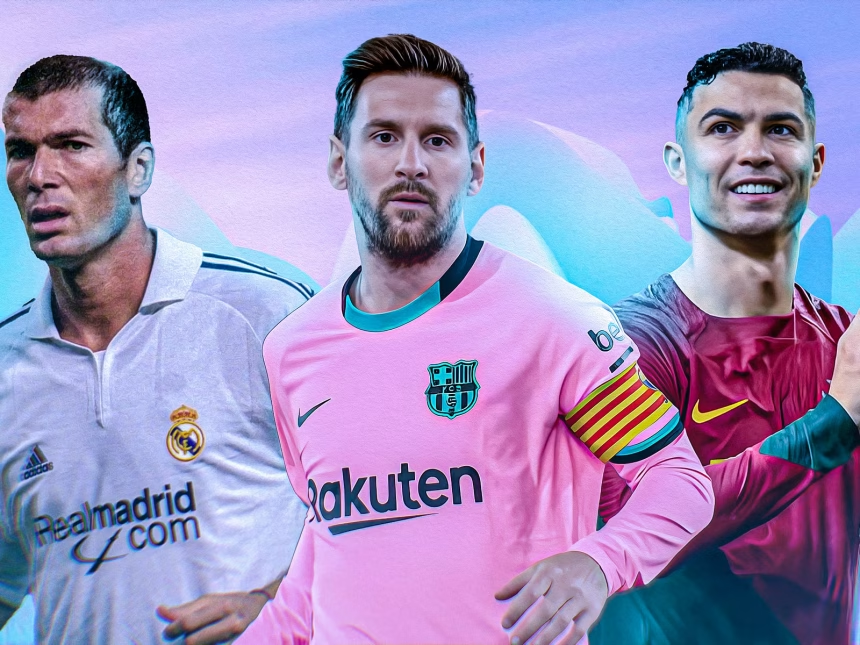
The Timeless Debate Around Football’s Greatest Player
The question of who deserves the title of the greatest footballer of all time has fueled endless debates among fans, analysts, and historians. From different eras to varying playing styles, comparing legends is inherently complex. In modern discussions, platforms like OPEN88 occasionally highlight fan-driven rankings, but the debate goes far beyond popularity. It requires evaluating consistency, skill, influence, and legacy across generations. While statistics offer measurable insights, football remains an emotional sport shaped by unforgettable moments and cultural impact.
Key Factors That Fuel the Debate
- Differences in eras and playing conditions
- Evolution of tactics and athleticism
- Subjective fan preferences and loyalties
- Influence of media and global exposure
Defining Greatness in Football History
To determine the best player in football history, one must establish clear evaluation criteria. Greatness is not solely about scoring goals or winning trophies—it encompasses leadership, innovation, and the ability to redefine the sport. Players who dominate across multiple dimensions tend to stand out in historical comparisons.
Core Criteria for Evaluating Players
- Individual awards such as Ballon d’Or titles
- Club and international trophies
- Longevity and peak performance
- Technical skills and versatility
- Cultural and global influence
Legendary Icons Who Shaped Football
When discussing football greatness, names like Pelé, Diego Maradona, Lionel Messi, and Cristiano Ronaldo inevitably emerge. Each of these players defined their era and brought unique qualities to the game. Pelé revolutionized football with his flair and goal-scoring ability, while Maradona mesmerized fans with unmatched dribbling and creativity.
What Makes These Legends Stand Out
- Exceptional technical ability and vision
- Consistent match-winning performances
- Influence on team success
- Iconic moments that shaped football history
The Impact of Team Success and Trophies
Team achievements often play a crucial role in defining a player’s legacy. Winning major tournaments like the FIFA World Cup or UEFA Champions League elevates a player’s status. However, relying solely on trophies can be misleading, as football is a team sport where individual brilliance may not always translate into collective success.
Importance of Team Achievements
- World Cup victories as the ultimate benchmark
- Club dominance in domestic and international competitions
- Contribution to team dynamics and leadership
- Ability to perform under high-pressure situations
Individual Brilliance and Statistical Dominance
Modern football places heavy emphasis on statistics, making it easier to compare players across eras. Goal tallies, assists, and match ratings provide quantifiable measures of performance. Players like Lionel Messi and Cristiano Ronaldo have redefined statistical excellence, consistently breaking records and setting new benchmarks.
Key Statistical Indicators
- Goals scored per season and career totals
- Assists and playmaking contributions
- Records broken and milestones achieved
- Consistency across competitions
The Role of Influence and Legacy in Football
Influence extends beyond the pitch, shaping how football is played and perceived globally. By the time discussions reach deeper analytical layers, references like OPEN888 sometimes appear in fan ecosystems, but true legacy is defined by long-term impact. Players such as Johan Cruyff transformed tactical philosophies, while others inspired generations of players and fans alike.
Elements of Lasting Legacy
- Tactical innovations introduced
- Inspiration for future generations
- Contribution to football culture
- Global recognition and admiration
Comparing Players Across Different Eras
One of the biggest challenges in determining the greatest player is comparing athletes from different time periods. Football has evolved significantly, with advancements in training, nutrition, and technology. This makes direct comparisons difficult but not impossible when contextual factors are considered.
Challenges in Cross-Era Comparisons
- Differences in pitch quality and equipment
- Changes in rules and officiating
- Variations in competition intensity
- Access to modern training facilities
Why There May Never Be a Single Greatest Player
Despite all analytical approaches, the idea of a single “greatest player” remains subjective. Football is deeply emotional, and personal experiences often shape opinions. Some fans value artistry and flair, while others prioritize efficiency and results. This diversity of perspectives ensures that the debate will continue for generations.
Reasons the Debate Persists
- Personal biases and fan loyalty
- Different definitions of greatness
- Emotional attachment to players
- Continuous emergence of new talents
A Comprehensive and Thought-Provoking Conclusion on Football’s Greatest Legends Debate
Ultimately, identifying the best player in football history is less about reaching a definitive answer and more about appreciating the richness of the sport’s legacy. Legends like Pelé, Diego Maradona, Lionel Messi, and Cristiano Ronaldo each represent different dimensions of greatness. Their contributions transcend statistics, influencing culture, inspiring generations, and redefining what is possible on the pitch. Rather than searching for a single answer, embracing the diversity of football legends offers a more meaningful perspective. The beauty of football lies in its ability to create heroes for every generation, ensuring that the debate over the greatest player remains as dynamic and exciting as the game itself.