Independent contractors, sole traders, and self-employed professionals often find themselves in a peculiar position when approaching a lender. Their earnings are strong, their contracts are consistent, and their financial track record is solid — yet the standard mortgage application process treats them like high-risk borrowers. The issue is not income; it is how that income is documented, classified, and interpreted by conventional underwriting models built around salaried employment.
This disconnect between real-world contractor earnings and how those earnings appear on paper is one of the most persistent and frustrating challenges in the mortgage market for independent workers. Understanding why it happens, and how to work within and around the system, is what separates contractors who secure strong borrowing terms from those who walk away from the process unnecessarily empty-handed.
Why Contractor Income Is Misread by Traditional Lenders
When a salaried employee applies for a mortgage, a lender can verify income through payslips, a P60, and employment confirmation. The income is predictable, recurring, and easily quantifiable. For a contractor, none of that infrastructure exists in the same form. Income arrives as invoices, day rates, contract fees, or project-based payments — all of which can vary month to month even when annual earnings are high and consistent.
This is where many contractors run into problems. A lender using a standard affordability model will look at net profit rather than contract day rate, or they will average income over two or three years without accounting for deliberate income management, tax planning, or a period between contracts. The result is an artificially low income figure that does not reflect what the contractor actually earns or can sustainably repay.
Understanding how to structure an application around the realities of contract work is the foundation of a successful borrowing strategy. Specialist lenders who offer a mortgage for contractor applicants assess income differently — often using the annualised day rate or contract value rather than accounts-based net profit. This single distinction can dramatically change the borrowing ceiling for a contractor with an otherwise strong financial profile. Dedicated guidance on this approach is available through services focused specifically on mortgage for contractor applicants, where underwriting criteria is matched to how contractors actually earn.
The Day Rate Method and Why It Matters
The day rate method is one of the most significant underwriting adjustments available to contractors. Rather than examining net profits drawn from a limited company or self-employed accounts, a lender using this approach multiplies the contractor’s current day rate by a standard number of working days per year to arrive at a gross income figure. This reflects what the contractor earns in practice, not what their accountant has optimised for tax purposes.
For many contractors, especially those in IT, engineering, finance, or professional services, this produces a much higher income figure than accounts-based methods would suggest. A contractor earning a strong daily rate but drawing a modest salary and dividends through a limited company would appear to earn very little under traditional assessment. Under day rate underwriting, the picture changes entirely.
Not every lender offers this method, which is why the choice of lender matters as much as the quality of the application itself.
How Documentation Shapes the Application
One of the practical realities of applying for a mortgage as a contractor is that documentation requirements differ significantly from those of a salaried applicant. Where a permanent employee might need three months of payslips, a contractor may need to provide several contracts, evidence of contract renewals, a current contract with a defined end date, and potentially several years of accounts depending on the lender’s criteria.
The structure of that documentation matters. A contractor who can demonstrate a history of consecutive contracts with the same client or in the same sector is in a stronger position than one whose work history appears fragmented, even if total earnings are comparable. Continuity signals reliability to underwriters, regardless of whether the individual works through a limited company, an umbrella company, or as a sole trader.
Limited Company Contractors and Retained Profit
Many contractors operate through a personal service company, drawing a low salary and leaving profit within the company for tax efficiency. This is a widely used and entirely legitimate structure, but it creates a particular problem in mortgage applications where lenders assess personal income rather than company performance.
Some specialist lenders will consider retained profit within the company as part of affordability, treating the director’s total accessible earnings — salary, dividends, and retained profit — as the basis for income assessment. This is a more realistic reflection of the contractor’s financial position, but it requires lenders who understand limited company structures and are willing to apply more nuanced criteria.
Contractors in this position should be prepared to provide two or more years of company accounts, a current contract, and evidence that the company is trading actively. The strength of the application lies in presenting a complete and coherent picture of business finances, not simply the personal income drawn from the company.
Gaps Between Contracts and How They Are Assessed
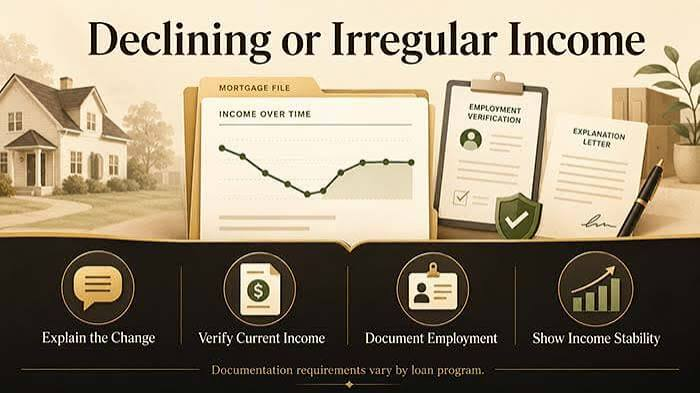
Gaps in contract history are one of the most common concerns contractors raise when considering a mortgage application. A break of several weeks between engagements is entirely normal in contract work, but to a lender using a rigid employment framework, it can appear as a period of unemployment or financial instability.
The way lenders handle gaps varies considerably. Some will ask for an explanation and assess the gap in context. Others will treat any gap within a recent period as a red flag. Specialist contractor-focused lenders tend to apply more contextual judgment, recognising that a contractor with five years of continuous contract history and a brief gap is not comparable in risk terms to someone with an uncertain income trajectory.
Timing an application to coincide with an active, recently renewed contract is the most straightforward way to reduce the weight a gap carries in underwriting. When that is not possible, a clear explanation and supporting documentation of previous contract history can mitigate the concern for the right lender.
Deposit Size, Credit Profile, and the Full Picture of Risk
Lenders assess mortgage applications across several dimensions simultaneously. Income is central, but deposit size and credit profile play an equally significant role in determining both eligibility and the terms available. For contractors, who already face more scrutiny on income, bringing strong performance in these other areas can shift the overall risk assessment in their favour.
A larger deposit reduces the lender’s exposure and signals financial discipline. A clean credit history with no missed payments, no excessive unsecured borrowing, and a stable financial footprint demonstrates that the contractor manages their finances responsibly regardless of how their income arrives. These factors can make the difference between a restricted product range and access to competitive rates.
The Role of a Mortgage Broker in Contractor Applications
The standard high street mortgage process is not designed with contractors in mind. Most major retail lenders use automated systems that assess applications against fixed criteria built around employment-based income. A contractor pushing an application through this channel is likely to face rejection or severely restricted borrowing terms, regardless of their actual financial strength.
A broker who works regularly with contractor clients understands which lenders use day rate assessment, which will consider retained company profit, and which are prepared to accept umbrella company income without penalising the applicant. This knowledge translates directly into better outcomes — not because the broker finds loopholes, but because they match the application to lenders whose criteria actually fit the applicant’s circumstances.
It is worth noting that the Financial Conduct Authority requires that mortgage advice in the UK is provided by authorised firms, and that recommendations must be suitable for the individual’s circumstances. Working with an authorised specialist is therefore both a practical and a regulatory consideration for contractors seeking tailored mortgage advice.
Structuring the Application to Reflect Reality
The most important principle for any contractor approaching a mortgage application is that the goal is accurate presentation, not exaggeration. Lenders who specialise in contractor borrowing are experienced at reading contractor finances, and any attempt to misrepresent income or structure will damage credibility rather than improve outcomes.
What matters is presenting information clearly, completely, and in the format that the chosen lender is equipped to assess. This means understanding your own income structure before beginning the process — knowing whether you are better assessed by day rate, net profit, or total company income, and selecting lenders whose criteria match that structure.
It also means being prepared. A contractor who approaches a lender with a current contract, a clean accounts history, and a structured explanation of their income is in a far stronger position than one who applies speculatively without that groundwork.
Key preparation steps include:
• Obtaining up-to-date company accounts or self-assessment returns covering at least two trading years where possible.
• Securing a copy of the current contract, including the start date, day rate, and duration or renewal terms.
• Reviewing credit history in advance to identify and address any issues before application.
• Calculating the day rate figure and understanding how it translates under annualised income assessment.
• Identifying whether retained company profit should be included and which lenders will consider it.
Closing Thoughts: The Contractor Mortgage Is Not a Special Favour
There is a perception in some quarters that securing a mortgage as a contractor requires finding a lender willing to take an unusual risk. That framing is inaccurate and unhelpful. Contractors who earn consistently, manage their finances responsibly, and bring a strong deposit to the table are not high-risk borrowers. They are borrowers whose income is structured differently from the employment model that conventional underwriting was built to assess.
The real challenge is one of alignment — finding lenders whose assessment criteria reflect the realities of how contractors earn rather than forcing contractor income into a framework designed for employees. Specialist lenders who offer a mortgage for contractor applicants on appropriate terms already exist across the market. The work lies in identifying them, approaching the process with the right preparation, and presenting finances in a way that accurately reflects their strength.
For contractors who take the time to understand how their income is assessed and who seek lenders equipped to work with contract-based earnings, the mortgage process is not the obstacle it is often perceived to be. It is a structured process that, when approached correctly, produces the same outcomes available to any financially stable borrower.