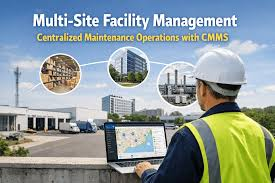
Facility management has quietly become one of the more operationally complex functions inside mid-size enterprises. As organizations grow across multiple locations, the coordination required to maintain buildings, equipment, compliance schedules, vendor relationships, and workforce activities expands in ways that older, site-specific tools were never designed to support. What worked reasonably well when a company operated out of a single building becomes fragile and inefficient when that same company manages a dozen properties with distributed teams and overlapping service contracts.
The shift toward cloud-hosted platforms for facility management reflects a genuine operational need, not a technology trend. Decisions about which software to adopt carry real consequences for maintenance continuity, regulatory compliance, cost visibility, and the daily experience of the people responsible for keeping facilities functional. This guide is written for operations leaders, facility directors, and procurement managers at mid-size U.S. enterprises who are in the process of evaluating their options and need a grounded framework for doing so.
What Cloud Based Facility Management Software Actually Does
At its core, cloud based facility management software is a centralized platform that allows organizations to plan, track, and coordinate the activities required to maintain physical assets and building environments. Unlike on-premise systems that store data locally and require dedicated IT infrastructure, cloud-based platforms host all data and processing on remote servers accessible through a browser or mobile application. This distinction matters practically because it removes the dependency on a single location for system access and reduces the burden on internal IT teams to manage and maintain the software.
For enterprises managing facilities across multiple sites, this architecture means that a maintenance supervisor in one city and a facility director in another can work from the same dataset in real time. Work orders, asset histories, vendor communications, compliance documentation, and inspection records are all visible to authorized users regardless of where they are physically located. This kind of operational consistency is difficult to replicate with spreadsheets, disconnected systems, or locally hosted software that requires manual synchronization.
Organizations evaluating their options can find structured information about what modern cloud based facility management software platforms include in terms of service capabilities and configuration at resources like cloud based facility management software, which outlines specific functional areas that enterprise buyers typically assess during procurement.
The Difference Between CMMS and Full Facility Management Platforms
One of the most common points of confusion in this category is the distinction between a Computerized Maintenance Management System, commonly called a CMMS, and a broader facility management platform. A CMMS is primarily designed around asset tracking and maintenance workflows. It helps teams schedule preventive maintenance, log work orders, and document repair histories. That functionality is valuable, but it addresses only part of what a facility management operation requires.
A full facility management platform extends beyond maintenance to include space planning, lease administration, energy monitoring, vendor contract management, compliance tracking, and often integrations with building automation systems. For a mid-size enterprise managing owned and leased properties simultaneously, the gap between a CMMS and a complete facility management platform is operationally significant. Choosing a narrower tool when broader functionality is needed often results in a second system being introduced later, which creates data fragmentation rather than resolving it.
How Mid-Size Enterprises Differ from Large Corporations in Their Requirements
The software evaluation process for mid-size enterprises operates under a different set of pressures than it does for large corporations with dedicated technology departments and multi-year implementation budgets. Mid-size organizations typically have smaller internal IT teams, tighter implementation timelines, and a stronger need for software that can be configured and used without extensive customization or outside consulting support.
This shapes what actually matters in a platform selection. Enterprise-grade systems designed for Fortune 500 buyers often come with implementation cycles measured in months, require specialized technical resources to configure, and carry pricing structures that assume large license volumes. These systems may have impressive feature sets, but their total cost of ownership and the operational disruption of implementation can outweigh their benefits for organizations that do not have the infrastructure to absorb that complexity.
Configuration Flexibility Without Implementation Overhead
Mid-size buyers need platforms that can be tailored to their specific workflows without requiring months of consulting engagement. This means the software should allow administrators to define asset categories, configure work order types, set approval hierarchies, and establish notification rules through a usable interface rather than through back-end code changes or vendor-managed deployments.
The practical implication is that a platform’s configurability needs to be evaluated not just by what it can theoretically do, but by how much internal effort is required to make those configurations work. A system that requires vendor support every time a workflow needs adjustment creates a dependency that slows operations and adds ongoing cost.
Scalability That Fits the Growth Trajectory
Mid-size enterprises are not static. Many are in active growth phases, acquiring additional properties, expanding into new markets, or absorbing facilities through mergers. A platform selected today needs to accommodate additional locations, users, and asset types without requiring a full system migration or a renegotiation of the entire contract.
Scalability in cloud-based platforms is often discussed in abstract terms, but operationally it means the system can handle additional data volume, support new user groups with distinct permission structures, and integrate with building systems or financial software that may be introduced as the organization grows. Buyers should assess whether a platform’s pricing model rewards growth or penalizes it through steep per-user or per-location costs.
Evaluating Core Functionality Before Feature Comparisons
Software evaluations often get pulled toward feature comparisons before the foundational questions have been resolved. A platform can have sophisticated reporting dashboards and advanced analytics capabilities, but if its work order management is cumbersome or its preventive maintenance scheduling requires manual intervention to function correctly, those secondary features do not compensate for the operational friction at the core of daily use.
Before comparing advanced features, mid-size buyers should establish clarity on a smaller set of foundational questions. Does the platform reliably process and route work orders without manual workarounds? Can maintenance schedules be set up and maintained without ongoing vendor assistance? Does the mobile interface work in low-connectivity environments, which is common in industrial and warehouse facilities? Are compliance-related records stored in a format that supports audit preparation?
Work Order Management and Technician Usability
The people who interact with facility management software most frequently are often technicians and field staff rather than administrators. If the interface for submitting, viewing, and closing work orders is awkward or unintuitive, adoption rates drop and teams revert to informal communication channels like text messages or phone calls, which defeats the purpose of having a centralized system.
Mobile usability is particularly important in this context. A technician working in a mechanical room or on a rooftop needs to be able to access a work order, update its status, and log completion notes from a phone without navigating through multiple screens or encountering loading delays. Platforms that treat mobile access as an afterthought rather than a core interface typically struggle with field adoption, which undermines data quality across the entire system.
Preventive Maintenance Scheduling and Asset History
Preventive maintenance is where facility management software generates its clearest return. When maintenance schedules are automated based on asset age, usage cycles, or manufacturer guidelines, the likelihood of unexpected equipment failure decreases and the documentation of service history becomes reliable. This matters for compliance purposes, for insurance claims, and for capital planning decisions about when to repair versus replace aging equipment.
The quality of asset history data depends on consistent use over time. Platforms that make it easy for technicians to log completed work and parts used build a richer dataset with each passing month. Organizations that have been disciplined about capturing this information in a cloud-based system are better positioned to make informed decisions about their physical assets than those relying on paper logs or disconnected spreadsheets.
Integration and Data Continuity Across Enterprise Systems
Facility management does not operate in isolation from the rest of the enterprise. Procurement decisions connect to accounting systems. Lease data connects to financial planning. Energy consumption connects to sustainability reporting. A facility management platform that cannot share data with the systems already in use across the organization creates additional manual work rather than reducing it.
Integration capability is therefore a practical evaluation criterion, not a secondary feature. The relevant question is not whether a platform has an open API, but whether it has established integrations with the specific systems already running in the organization, or whether those integrations need to be built from scratch. Building custom integrations requires development resources and ongoing maintenance, which represents a real cost that should be factored into the total cost of ownership.
Industry standards for facilities and building operations, including those maintained by organizations such as the Building Owners and Managers Association, increasingly emphasize data interoperability as a baseline expectation for modern facility operations, reflecting how dependent good facility management has become on the flow of accurate information between systems.
Vendor Stability and Long-Term Support Considerations
Cloud-based platforms operate as ongoing service relationships, not one-time purchases. The vendor responsible for the platform is also responsible for uptime, security updates, feature development, and customer support over the life of the contract. For an enterprise that has migrated its facility data and workflows into a platform, the stability of that vendor matters significantly.
Buyers should assess vendor longevity, funding model, customer retention trends, and the transparency of their support structure. A platform offered by a young company with uncertain funding may carry more risk than one backed by an established organization, even if the newer platform’s features appear more modern. The cost of migrating away from a platform that becomes unsupported or is acquired and deprioritized is substantial in terms of both time and operational disruption.
Closing Considerations for the 2025 Evaluation Cycle
The decisions being made in 2025 around cloud based facility management software are not simply technology decisions. They are operational decisions with consequences that extend across compliance exposure, maintenance reliability, workforce productivity, and long-term asset management. Mid-size enterprises that approach this evaluation with a structured framework rather than a feature checklist are more likely to select a platform that serves their needs beyond the initial implementation period.
The most useful starting point is an honest assessment of current operational gaps: where data is missing, where workflows are informal, where communication between teams breaks down, and where compliance documentation is inconsistent. A platform selected to address those specific gaps will deliver more practical value than one chosen primarily on the basis of a polished demonstration or a competitive price point.
As cloud based facility management software continues to mature as a category, the range of platforms available to mid-size buyers has expanded considerably. That expansion makes vendor differentiation harder to assess from marketing materials alone. Direct evaluation through structured pilots, reference conversations with similar organizations, and careful review of contract terms will remain the most reliable path to a sound procurement decision.