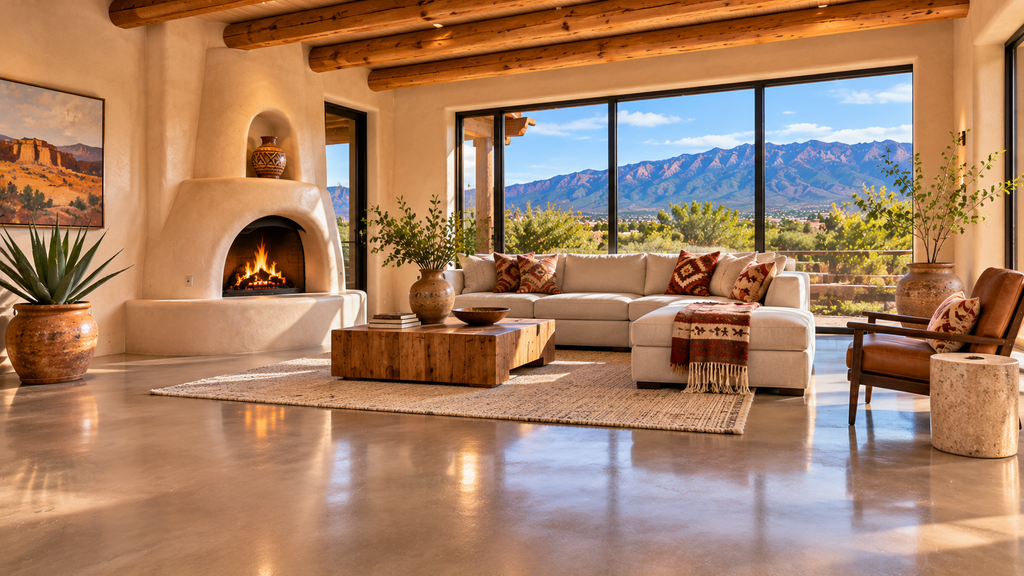
Santa Fe is known for its distinctive architectural character, where natural materials, handcrafted details, and contemporary design come together. From traditional adobe residences to expansive modern desert estates, homeowners increasingly appreciate finishes that combine understated beauty with lasting functionality.
One flooring option that fits this aesthetic particularly well is polished concrete.
Once associated primarily with commercial and industrial spaces, polished concrete has become an appealing choice for sophisticated residential interiors. Its smooth finish, subtle tonal variations, and seamless appearance can complement both traditional Southwestern architecture and modern minimalist design.
For homeowners exploring Santa Fe polished concrete, understanding the material’s design possibilities, installation requirements, and maintenance considerations can help determine whether it is the right choice for a luxury home.
What Is Polished Concrete Flooring?
Polished concrete is created by mechanically grinding and refining a suitable concrete surface using specialized equipment and progressively finer abrasives.
Depending on the condition of the existing slab and the desired appearance, the process may also involve surface repairs, densifiers, and protective treatments.
Unlike decorative coatings applied over a substrate, traditional polished concrete uses the concrete slab itself as the finished surface.
The result is a durable floor with a refined appearance that can range from a soft satin sheen to a highly reflective finish.
Because every concrete slab has its own characteristics, polished concrete often reveals subtle variations that give each installation a distinctive appearance.
Why Polished Concrete Appeals to Luxury Homeowners
Luxury interior design increasingly favors authentic materials that create visual interest without excessive ornamentation.
Polished concrete offers several characteristics that make it particularly attractive for high-end residences.
A Seamless Architectural Appearance
Large, uninterrupted flooring surfaces can create a sense of openness and continuity.
Polished concrete allows homeowners to establish a consistent visual foundation throughout living rooms, kitchens, hallways, and other interior spaces.
Existing joints and necessary movement joints remain part of the finished floor, but the absence of conventional tile grout lines can produce a cleaner appearance.
Natural Texture and Subtle Variation
Concrete is not a perfectly uniform material.
Depending on the slab and polishing process, the finished surface may display natural color variation, fine aggregate details, and subtle movement.
These characteristics can complement handcrafted furnishings, natural stone, and exposed wood.
Versatile Design Options
Polished concrete works with a wide range of interior styles.
Warm neutral tones can complement adobe-inspired architecture, while cooler gray finishes create a contemporary aesthetic.
The final appearance depends on the concrete itself, the degree of grinding, and any compatible coloring treatments selected.
Polished Concrete and Santa Fe Architecture
Santa Fe’s architectural identity makes polished concrete an especially interesting flooring option.
Traditional Southwestern homes often feature textured plaster walls, exposed wooden vigas, kiva fireplaces, and natural earth tones.
Polished concrete can provide a subtle contrast to these expressive architectural elements.
For example, a warm gray polished floor paired with cream-colored plaster walls and natural wood beams creates a balanced interior that feels both modern and rooted in regional tradition.
In contemporary desert homes, polished concrete can complement floor-to-ceiling windows, minimalist cabinetry, steel accents, and expansive open-plan living areas.
Its restrained appearance allows architectural details and carefully selected furnishings to remain the focal points.
Choosing the Right Level of Polish
One of the advantages of polished concrete is the ability to customize its appearance.
The level of sheen influences how the finished floor interacts with natural and artificial light.
Matte and Low-Sheen Finishes
A lower-sheen appearance offers a softer, more understated look.
This style can work particularly well in Southwestern interiors where natural textures and warm finishes are emphasized.
Satin Finishes
Satin polished concrete provides a balance between subtle reflection and a refined surface.
It is often appealing for residential interiors that need a contemporary appearance without a highly glossy effect.
High-Gloss Finishes
Highly polished concrete can reflect more light and create a dramatic visual effect.
This approach may suit modern luxury homes with clean architectural lines and carefully controlled lighting.
The preferred finish should be evaluated alongside practical considerations, including surface texture, slip resistance, and the intended use of each space.
Polished Concrete in Kitchens and Living Areas
Polished concrete can be particularly effective in open-concept homes.
In a kitchen, it provides a visually consistent foundation beneath cabinetry, islands, and dining areas.
Its neutral appearance pairs well with materials such as walnut, oak, stainless steel, natural stone, and handcrafted tile.
In living rooms, polished concrete can create an elegant backdrop for area rugs, sculptural furniture, and decorative lighting.
For Santa Fe homeowners who appreciate indoor-outdoor design, coordinated concrete finishes can also help establish a visual relationship between interior living areas and adjacent patios.
However, exterior concrete requires different surface treatments and slip-resistance considerations from interior polished floors.
Durability and Everyday Performance
Concrete is valued for its strength, but the performance of a polished floor depends on the slab’s condition, installation quality, and maintenance.
A properly prepared and polished concrete floor can withstand regular residential foot traffic while maintaining an attractive appearance.
Unlike some flooring materials, polished concrete does not require a separate layer of wood, carpet, or conventional tile over the slab.
However, concrete is not completely resistant to damage.
Heavy impacts, staining substances, moisture problems, and existing slab movement can affect the finished surface.
Professional evaluation helps determine whether a particular slab is suitable for polishing.
Is Polished Concrete Comfortable in Santa Fe Homes?
Concrete’s thermal properties are worth considering in Santa Fe’s climate.
Concrete has substantial thermal mass, meaning it can absorb, store, and release heat over time.
In appropriately designed buildings, this characteristic can contribute to more stable indoor temperatures.
Polished concrete can also work with compatible radiant floor heating systems, which may be attractive in Northern New Mexico’s colder months.
However, polished concrete alone does not guarantee improved energy efficiency.
Comfort and energy performance depend on factors such as insulation, heating systems, solar exposure, and overall building design.
Area rugs can add warmth and softness in bedrooms, living spaces, and other areas where homeowners prefer a more cushioned surface.
Polished Concrete vs. Microcement
Although polished concrete and microcement can produce similar contemporary aesthetics, they are different finishing systems.
Polished concrete typically involves mechanically refining an existing or newly placed concrete slab.
Microcement is a thin decorative coating applied over a properly prepared, compatible substrate.
Microcement may be considered when the existing surface cannot be polished directly or when a continuous decorative finish is desired on other suitable surfaces.
Traditional polished concrete may be preferable when a suitable structural slab is already available.
The correct choice depends on the existing construction, desired appearance, budget, and performance requirements.
Why Professional Concrete Finishing Matters
Creating an attractive polished concrete floor requires more than simply making the surface shiny.
Professional contractors must evaluate the slab’s condition, identify cracks and previous coatings, and determine the appropriate preparation process.
The final appearance can be influenced by:
- Concrete hardness and composition
- Existing surface damage
- Aggregate exposure
- Grinding depth
- Abrasive selection
- Coloring treatments
- Desired sheen
- Protective finishing methods
Existing cracks, repairs, and slab variations may remain visible after polishing.
For luxury residential projects, discussing these characteristics beforehand helps establish realistic expectations.
Physical samples and examples of completed work can also help homeowners select a finish that complements the overall design.
Maintaining Polished Concrete Floors
Polished concrete is generally straightforward to maintain, but appropriate cleaning practices remain important.
Regular dust removal helps prevent abrasive particles from scratching the surface.
Homeowners should use cleaning products recommended for polished concrete and avoid harsh acidic chemicals that may damage the finish.
Spills should be cleaned promptly, particularly when they involve substances that could stain the concrete.
Protective pads beneath furniture can help reduce unnecessary wear.
Periodic professional maintenance may also be appropriate depending on traffic, surface condition, and the finishing system.
A Refined Flooring Choice for Santa Fe Living
The appeal of polished concrete extends beyond its contemporary appearance.
For Santa Fe homeowners, it offers an opportunity to combine natural material character with architectural simplicity.
Its subtle textures, customizable sheen, and compatibility with wood, plaster, stone, and other Southwestern design elements make it a compelling option for luxury residential interiors.
Whether incorporated into a new custom home or considered during a major renovation, polished concrete deserves careful evaluation.
By choosing an appropriate finish, understanding the condition of the underlying slab, and working with experienced concrete finishing professionals, homeowners can create elegant spaces that reflect Santa Fe’s distinctive architectural character.
Beautiful flooring should do more than complement a room. It should become an integral part of the home’s design, providing a refined foundation for everyday living.