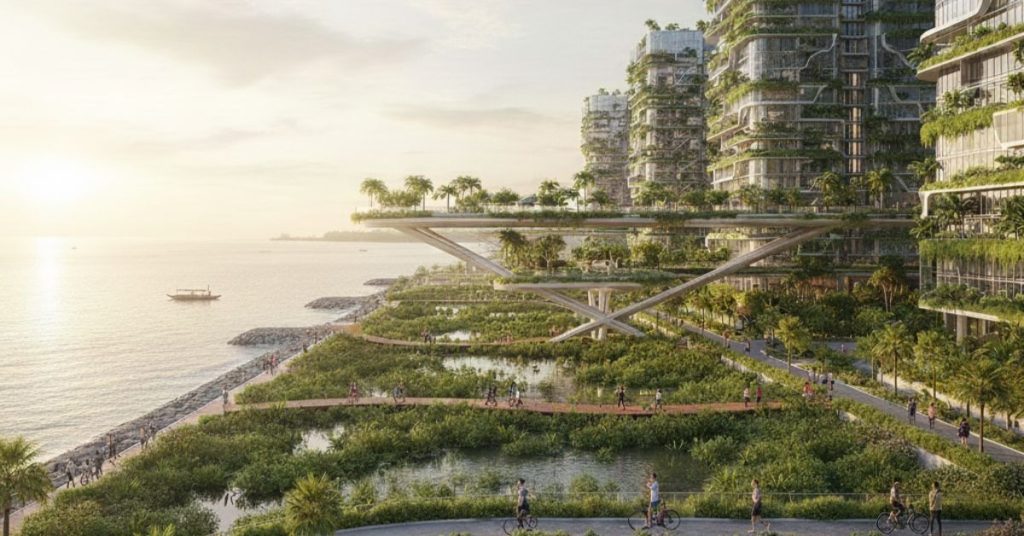
The modern urban landscape is witnessing a remarkable transformation as developers increasingly prioritize environmental sustainability alongside luxury and convenience. Singapore, a global leader in sustainable urban planning, continues to set benchmarks with innovative residential developments that harmoniously blend coastal living with ecological responsibility. One such example is Vela One, a thoughtfully planned condominium development at Bayshore Road that exemplifies how contemporary architecture can embrace green principles while delivering exceptional living experiences. This shift toward sustainable residential design represents more than just a trend; it signals a fundamental reimagining of how we approach urban development in densely populated cities.
The Evolution of Green Residential Architecture in Urban Centers
Cities around the world are grappling with the dual challenges of accommodating growing populations while reducing their environmental footprint. Singapore has emerged as a pioneering force in this arena, implementing comprehensive urban planning strategies that prioritize sustainability without compromising quality of life. The government’s Green Building Masterplan has set ambitious targets for creating energy-efficient buildings, with recent developments required to meet stringent environmental standards.
Modern residential projects are incorporating numerous eco-friendly features that were once considered luxury additions but are now becoming standard practice. These include energy-efficient climate control systems, water conservation technologies, and extensive green spaces that serve both aesthetic and environmental purposes. The integration of natural ventilation, solar panels, and rainwater harvesting systems demonstrates how technology and design can work together to minimize environmental impact.
What makes developments like Vela One particularly noteworthy is their strategic location along Singapore’s East Coast, where environmental consciousness meets contemporary living standards. The project’s proximity to East Coast Park, one of Singapore’s most cherished green spaces reinforces the connection between urban development and natural preservation. This approach recognizes that sustainable living extends beyond individual buildings to encompass entire neighborhoods and their relationship with surrounding ecosystems.
Transportation Infrastructure and Carbon Footprint Reduction
One of the most significant contributors to urban carbon emissions is transportation. The environmental benefits of transit-oriented development cannot be overstated, and Singapore’s commitment to expanding its Mass Rapid Transit network reflects this understanding. Residential developments positioned near MRT stations encourage residents to rely on public transportation rather than private vehicles, substantially reducing per-capita carbon emissions.
The Thomson-East Coast Line represents a major investment in sustainable transportation infrastructure, with stations like Bayshore MRT providing direct connections to key business districts and commercial hubs. When residential developments like Vela One are situated adjacent to these transit nodes, they naturally promote a more sustainable lifestyle. Residents can commute efficiently to the Central Business District, Marina Bay, and other destinations without depending on cars, thereby contributing to improved air quality and reduced traffic congestion.
Beyond the environmental benefits, this transit-oriented approach enhances quality of life by reducing commute times and stress. The seamless connectivity offered by modern MRT systems means residents spend less time in traffic and more time engaged in productive or leisure activities. This holistic approach to urban planning recognizes that sustainability encompasses not just environmental factors but also the well-being and time management of residents.
Integrating Natural Spaces with Urban Development
The relationship between urban development and natural preservation has historically been contentious, with expansion often coming at the expense of green spaces. However, contemporary planning philosophies recognize that these elements need not be mutually exclusive. Singapore’s approach to integrating parks, waterfront areas, and green corridors within urban districts demonstrates that density and nature can coexist productively.
East Coast Park serves as a prime example of this integration, offering fifteen kilometers of scenic coastline with cycling paths, beach areas, and recreational facilities. Residential developments in the vicinity benefit immensely from this proximity, providing residents with immediate access to outdoor activities and natural environments. The ability to transition seamlessly from urban living to coastal recreation represents a significant quality-of-life advantage that also promotes healthier, more active lifestyles.
Properties such as Vela One capitalize on this geographical advantage, offering residents the best of both worlds modern urban amenities and direct access to one of Singapore’s premier recreational areas. This proximity to natural spaces has been shown to have measurable benefits on mental health, physical fitness, and overall life satisfaction. Studies consistently demonstrate that access to green spaces reduces stress, encourages physical activity, and fosters community connections.
Smart Building Technologies and Energy Efficiency
The integration of smart technologies in residential buildings represents another frontier in sustainable urban development. Modern condominiums are increasingly equipped with building management systems that optimize energy consumption, monitor resource usage, and adapt to occupancy patterns. These intelligent systems can significantly reduce waste and operating costs while maintaining comfort standards.
Advanced climate control systems now employ sensors and algorithms to adjust temperature and ventilation based on actual usage rather than fixed schedules. This responsive approach to building management can reduce energy consumption by twenty to thirty percent compared to traditional systems. Similarly, intelligent lighting systems that adjust based on natural light availability and occupancy further contribute to energy savings.
Water conservation technologies have also advanced considerably, with modern residential developments implementing systems that recycle greywater for non-potable uses such as landscaping and toilet flushing. Rainwater harvesting systems capture and store precipitation for later use, reducing dependence on municipal water supplies. These technologies are particularly valuable in regions where water scarcity is an emerging concern.
Community Design and Social Sustainability
Sustainable development extends beyond environmental considerations to encompass social dimensions as well. The design of residential communities can either foster or hinder social interaction, community cohesion, and collective well-being. Modern developments increasingly recognize the importance of creating spaces that encourage neighborly interaction and community building.
Shared amenities such as community gardens, recreational facilities, and common gathering spaces serve multiple purposes. They provide opportunities for residents to interact, reducing social isolation while also promoting resource sharing and collective activities. These spaces become the social fabric of residential communities, creating a sense of belonging and shared identity among residents.
The Vela One development exemplifies this community-oriented approach with thoughtfully designed common areas that encourage social engagement. Facilities such as swimming pools, fitness centers, and barbecue areas are not merely amenities but catalysts for community interaction. When residents regularly encounter neighbors in these shared spaces, it fosters the kind of social connections that contribute to overall well-being and community resilience.
Economic Sustainability and Long-Term Value
While environmental sustainability often dominates discussions of green development, economic sustainability is equally critical. Residential properties that incorporate sustainable features tend to maintain their value better over time, as energy efficiency and low operating costs become increasingly important to buyers and renters. This economic dimension ensures that sustainable development is not just an idealistic pursuit but a practical investment strategy.
Properties near major transit infrastructure typically experience stronger appreciation rates, as connectivity becomes more valuable in congested urban environments. The Bayshore precinct, with its developing infrastructure and strategic position along the East Coast, represents an area with significant growth potential. As the Thomson-East Coast Line becomes fully operational and the surrounding neighborhood continues to develop, properties in the area are well-positioned for value appreciation.
Moreover, the emphasis on quality construction and sustainable materials often results in lower maintenance costs over the building’s lifespan. Energy-efficient systems reduce utility expenses for residents, while durable materials decrease the frequency of repairs and replacements. These factors contribute to the overall economic sustainability of the development, benefiting both individual owners and the community as a whole.
The Future of Sustainable Coastal Urban Living
Looking ahead, the trajectory of urban development in Singapore and similar cities worldwide points toward increasingly sophisticated integration of sustainability principles. Future residential projects will likely incorporate even more advanced technologies, from energy-positive buildings that generate more power than they consume to vertical gardens that contribute to urban biodiversity.
The success of developments like Vela One in balancing luxury, convenience, and environmental responsibility provides a blueprint for future projects. As climate change concerns intensify and urban populations continue to grow, the lessons learned from these pioneering developments will become increasingly valuable. The key lies in recognizing that sustainability is not a constraint on development but rather an opportunity to create better, more livable communities.
Singapore’s commitment to sustainable urban development, exemplified by projects throughout the city-state, demonstrates that economic growth and environmental stewardship can advance together. By prioritizing transit connectivity, preserving green spaces, implementing smart technologies, and fostering community cohesion, modern residential developments are redefining what it means to live sustainably in urban environments.
Conclusion
The evolution of residential development toward greater sustainability represents one of the most important trends in contemporary urban planning. As cities worldwide grapple with environmental challenges, population growth, and quality-of-life concerns, the Singapore model offers valuable insights. Developments that successfully integrate transit connectivity, environmental consciousness, modern amenities, and community design demonstrate that sustainable urban living need not require sacrifices in comfort or convenience.
The Vela One project at Bayshore exemplifies how thoughtful planning and design can create residential communities that honor both environmental values and residents’ aspirations for quality living. By situating developments near transit infrastructure, preserving access to natural spaces, implementing efficient building systems, and designing for community interaction, developers can create lasting value that extends well beyond individual properties.
As we move forward, the principles demonstrated by such developments will become increasingly mainstream, shaping the future of urban residential living. The challenge and opportunity before us is to ensure that sustainable development becomes not the exception but the standard, creating cities that are not only habitable but truly flourishing environments for current and future generations. Through continued innovation, thoughtful planning, and commitment to environmental stewardship, we can build urban communities that exemplify the best of contemporary sustainable living while preserving the natural beauty and resources that make life worth living.