Essential Skills You Learn In A First Aid And CPR Course In Maitland
Emergencies can occur at any moment and frequently without prior notification. Whether at home, in the workplace, at school, or in public spaces, knowing how to respond quickly and correctly can make a life-saving difference. Enrolling in a first aid and CPR course Maitland provides practical skills and confidence to act effectively during medical emergencies. These courses are intended to provide individuals with the necessary knowledge to provide assistance to others while they await professional medical assistance.
Recognising And Responding To Emergencies
One of the most important skills taught in first aid training is how to recognise a medical emergency and respond appropriately. Participants learn to assess a situation safely before providing assistance. This includes identifying hazards, checking responsiveness, and determining whether a person is breathing normally.
Understanding how to remain calm and prioritise actions is critical during emergencies. Training emphasises quick decision-making, ensuring that the responder can provide immediate care without putting themselves or others at risk.
Performing Cardiopulmonary Resuscitation (CPR)
One of the most critical life-saving techniques that is taught in training programs is cardiopulmonary resuscitation (CPR). In the event that an individual’s heart stops beating or their breathing ceases, immediate cardiopulmonary resuscitation (CPR) can ensure that vital organs receive sufficient oxygen and blood flow until emergency services arrive.
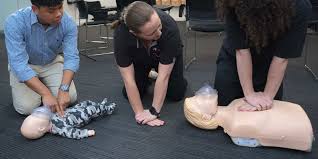
A Maitland CPR certification course teaches the correct technique for chest compressions and rescue breaths, including compression depth, rhythm, and hand placement. Participants practice on training mannequins to build muscle memory and confidence. The course also addresses the utilisation of automated external defibrillators (AEDs), which are capable of reestablishing a normal heart rhythm in the event of cardiac arrest.
Managing Breathing And Choking Emergencies
Airway obstruction can quickly become life-threatening if not treated promptly. First aid training teaches how to identify signs of choking and how to perform appropriate interventions such as back blows and abdominal thrusts.
Participants also learn how to assist individuals experiencing asthma attacks, allergic reactions, or breathing difficulties. Understanding how to help someone breathe more easily can prevent complications while waiting for medical assistance.
Treating Wounds, Bleeding, And Burns
Another essential component of first aid training involves managing injuries such as cuts, bleeding, and burns. The appropriate cleaning and dressing of wounds is taught to learners in order to promote healing and prevent infection.
Training also covers techniques for controlling bleeding using pressure and bandaging, as well as how to manage severe bleeding emergencies. For burns, participants learn to cool the affected area, protect the skin, and determine when professional care is required.
Handling Fractures, Sprains, And Soft Tissue Injuries
Accidents can result in fractures, sprains, or muscle injuries. First aid training teaches how to recognise symptoms such as swelling, pain, and deformity. Participants learn how to immobilise injured limbs and provide support to prevent further damage.
Knowing how to assist someone with mobility injuries can reduce discomfort and prevent complications until medical professionals take over.
Responding To Shock And Medical Conditions
Shock is a severe condition that may develop as a result of trauma, blood loss, or injury. Training teaches how to recognise signs such as pale skin, rapid breathing, and confusion. Responders learn how to position the person safely and keep them comfortable while awaiting help.
Courses also provide guidance on responding to medical conditions, including seizures, diabetic emergencies, fainting, and heat-related illnesses. Understanding these situations helps ensure appropriate care is provided quickly.
Building Confidence Through Practical Training
Hands-on practice is a key part of Maitland First Aid training, allowing participants to apply their knowledge in simulated scenarios. This practical approach builds confidence and ensures individuals feel prepared to act in real situations.
Training also emphasises communication skills, including how to provide clear information to emergency services and reassure injured individuals. Confidence and calm communication can significantly improve outcomes during stressful situations.
Supporting Workplace And Community Safety
First aid and CPR skills are valuable not only for personal preparedness but also for workplace safety and community well-being. Many employers encourage or require staff to complete training to ensure a safe environment.
By learning these essential skills, individuals become capable of assisting family members, coworkers, and members of the public during emergencies. This shared responsibility strengthens community resilience and promotes a culture of safety.
Conclusion
Learning first aid and CPR equips individuals with practical skills that can save lives and reduce injury severity. From performing CPR and managing breathing emergencies to treating wounds and responding to medical conditions, these courses provide comprehensive training for real-world situations. By gaining knowledge, hands-on experience, and confidence, participants become prepared to respond calmly and effectively when emergencies arise. Time spent in first aid training is not only advantageous for oneself but also a substantial contribution to the safety and welfare of the entire community.