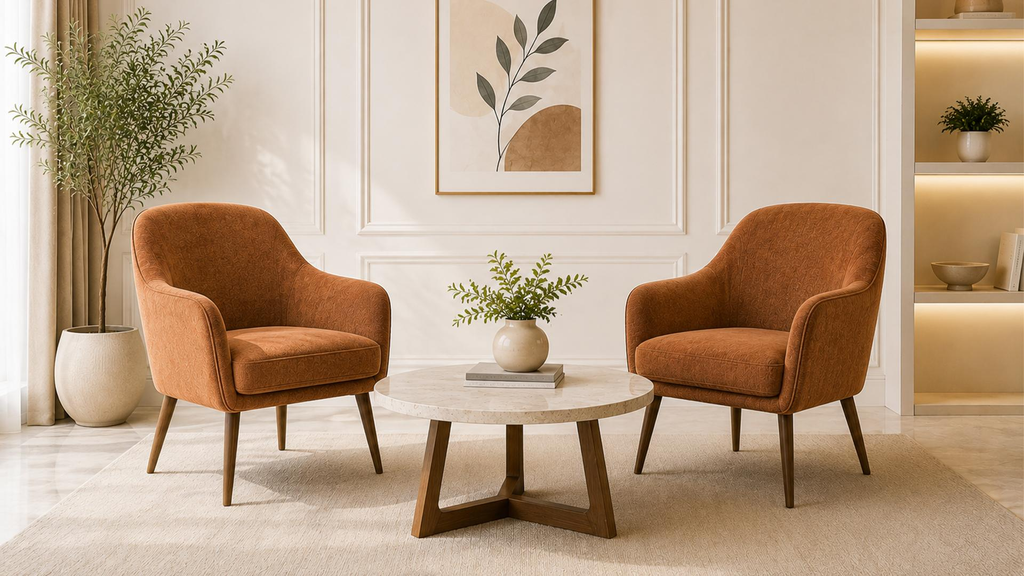
Why the Right Seating Sets the Tone for Your Living Room
Walk into most homes and the first thing that registers, before the wall colour or the artwork, is where and how the seating is arranged. A living room can be decorated carefully in every other respect and still feel oddly unwelcoming if the seating itself doesn’t invite people to sit down and stay a while. It’s often the single biggest factor in whether a room feels like a place for gathering or simply a space people pass through on the way to somewhere else.
This is why seating deserves more thought than it typically gets. Many households inherit a sofa set early on and rarely revisit the decision, even as the room’s use changes over the years. A single seating change, adding a new chair, adjusting the arrangement, replacing a piece that no longer suits the space, can shift how a room feels far more than a fresh coat of paint ever could.
Guests notice this instinctively even when they couldn’t explain it. Two identical living rooms, decorated with similar colours and artwork, can feel completely different depending on how the seating is arranged and how comfortable it actually turns out to be once someone sits down. That instinctive reaction is exactly why seating deserves to be treated as a priority rather than an afterthought filled in once everything else has been decided.
Ask someone why they love a particular friend’s living room and the answer rarely mentions colour scheme. It’s almost always something closer to “it just feels comfortable in there,” which usually traces straight back to the seating.
What Makes Some Living Rooms Feel More Welcoming Than Others
The difference between a living room people linger in and one they quickly leave usually comes down to a handful of practical factors rather than anything dramatic. Seating that faces inward, allowing people to see each other easily, encourages longer conversations than seating lined up against walls facing a television. Proximity matters too. Chairs and sofas placed too far apart make a room feel scattered. Group pieces sensibly around a central point instead, and there’s a natural pull toward sitting down that a scattered layout never quite manages.
Comfort plays an equally large role, though it’s often assumed rather than actually tested. A sofa that looks striking in a showroom can feel entirely different after twenty minutes of actual use. The rooms that consistently feel inviting are usually the ones where every piece of seating was chosen with real use in mind, not just how it photographs from across the room.
Choosing Comfortable Seating That Suits Your Lifestyle
Seating choices should reflect how a household actually spends time together, not an idealised version of it. A family that gathers for long evenings of conversation needs deeper, more relaxed seating than one that mostly uses the living room for quick catch ups between other activities. Material matters here too. Households with children or pets benefit from fabrics that hold up to daily wear, while quieter households have more flexibility to prioritise softer, more delicate finishes.
Wood remains a strong choice for many Indian homes, partly for how well it holds up over years of daily use and partly for how naturally it fits alongside both traditional and newer interior styles. Premium wooden sofa chair designs have grown more varied in recent years, ranging from low slung, minimal frames to more substantial pieces with detailed carving, giving households real choice depending on the mood they want the room to carry.
Upholstery choice deserves the same level of thought as the frame itself. Lighter fabrics brighten a room but show wear faster, while darker tones hide daily use more easily at the cost of making a smaller room feel more closed in. Households often settle this trade off by choosing a mid tone fabric for larger pieces and reserving bolder colours or patterns for smaller accent chairs that can be replaced or reupholstered without much disruption. Testing a fabric sample under actual room lighting, rather than trusting how it looks under a shop’s bright display lights, also prevents the disappointment of a colour that reads completely differently once it’s home.
Arranging Seating for Better Conversations and Everyday Comfort
Even the right pieces of furniture can underperform if the arrangement works against them. A common mistake is pushing every seat to the perimeter of the room, which leaves the centre feeling empty and conversation feeling strained across too much distance. Angling chairs slightly toward each other, rather than in strict straight lines, softens this effect considerably and makes conversation feel more natural.
A single accent piece, such as a wooden lounge chair for living room corners, can also do a great deal to break up a predictable sofa and coffee table layout. Positioned near a window or beside a bookshelf, a lounge chair gives the room a secondary gathering point, useful both for everyday reading and for accommodating extra guests without needing to rearrange the whole space.
Small Seating Details That Make Every Guest Feel Welcome
Beyond the main pieces, smaller seating details often determine how comfortable guests actually feel once they sit down. Cushion firmness, armrest height, and even the texture of upholstery all shape a first impression people register within seconds of sitting, even if they couldn’t describe exactly why a chair feels right or wrong. A room with a good mix of firmer and softer seating options suits a wider range of guests than one where every seat feels identical.

Side tables placed within easy reach of each seat matter more than they’re usually given credit for. Without somewhere nearby to set down a cup or a phone, guests tend to stay less relaxed, holding onto items rather than settling in properly. These are minor additions individually, but together they shape whether a living room feels genuinely hospitable or merely furnished.
Throws and extra cushions add one more layer of flexibility that gets overlooked in most seating plans. A firm sofa becomes noticeably softer with the right cushion support, and a room set up for cooler evenings, with a throw within easy reach, tends to keep guests settled in longer than one where comfort has to be actively requested.
Creating a Living Room Everyone Loves to Spend Time In
A living room doesn’t need a full renovation to feel more inviting. Often it needs nothing more than a closer look at how the seating is chosen and arranged. Comfortable, well suited pieces positioned to encourage conversation rather than distance change a room’s whole feel more than any other single change a household can make.
For families weighing where to focus their next home update, seating is one of the more practical places to start. The right chair or sofa, placed thoughtfully within the room, has a way of making a space feel lived in and welcoming almost immediately, turning a living room from a room people simply pass through into one they genuinely want to stay in.
The households that notice the biggest difference tend to be the ones who stopped treating seating as a purely functional purchase and started treating it as the centrepiece of how the room actually gets used, day after day, guest after guest.
It doesn’t take a big budget or a weekend of rearranging furniture to test this out. Move one chair, add one cushion, and see how the room feels the next time people gather in it.
Nine times out of ten, the room already knows what it needs. Most people just haven’t stopped long enough to notice which corner nobody ever sits in, and why.