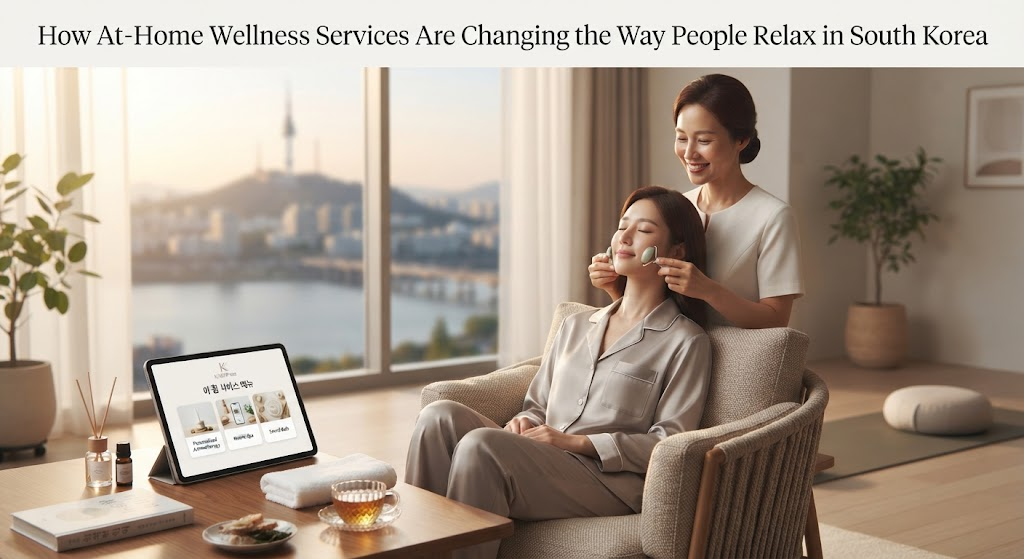
Modern lifestyles have changed the way people think about rest and personal wellness. For many people, relaxation once meant setting aside time to visit a spa, fitness center, or other dedicated wellness facility. Today, convenience has become an increasingly important part of the experience.
This shift can be seen in many parts of everyday life. Food can be delivered directly to the home, personal training sessions can take place remotely or in private spaces, and beauty services can often be arranged without visiting a traditional salon. Wellness services are gradually becoming part of this broader trend as well.
In South Korea, where long working hours, busy urban environments, and extensive commuting can make personal time valuable, at-home wellness offers another way for people to organize relaxation around their schedules.
The Growth of Home-Centered Wellness
Home is increasingly becoming more than simply a place to sleep at the end of the day. Many people are creating spaces where they can exercise, meditate, enjoy entertainment, and take care of their general well-being.
This does not necessarily require an elaborate home gym or expensive equipment. Simple habits can make a significant difference. Dimming the lights in the evening, putting away digital devices, taking a warm shower, stretching, listening to relaxing music, or spending time away from work-related notifications can all help create a calmer atmosphere.
The underlying idea is simple: instead of always traveling somewhere else to relax, some parts of a wellness routine can come to you.
Why Convenience Matters
Convenience is particularly valuable in large metropolitan areas.
Seoul, Incheon, and cities throughout Gyeonggi Province are connected by extensive transportation networks, but traveling across these areas can still require considerable time. After commuting or spending a full day working, another journey to a wellness facility may not always be appealing.
This has helped create interest in appointment-based services that can be provided at a customer’s preferred location.
Massage is one example.
Instead of visiting a traditional massage establishment, mobile services can allow an appointment to take place at a residence or other appropriate private location. For people researching these options in South Korea, services such as 밀크출장마사지 illustrate how massage and relaxation services can be organized around a customer’s location and schedule.
The concept is similar to other mobile services: convenience is created by reducing the amount of additional travel required from the customer.
Massage as Part of a Broader Wellness Routine
Massage is often associated with spas and vacations, but it can also be viewed as one component of a broader relaxation routine.
Some people combine massage with stretching, warm baths, aromatherapy, quiet music, or simply an evening without work-related distractions. Others may schedule a session after a particularly busy week or when they want to dedicate time specifically to relaxation.
Personal preferences vary considerably, which is why there is no single ideal wellness routine.
Someone who enjoys physical activity may prefer stretching and recovery-focused activities. Another person may value meditation and quiet time, while someone else may simply want an opportunity to disconnect from a demanding schedule.
The important point is that wellness does not necessarily have to follow the same format for everyone.
Choosing an At-Home Service Carefully
Convenience should not be the only consideration when selecting any service that comes to a private location.
Customers should take time to understand exactly what a provider offers before making a reservation. A professional website should clearly explain available services, prices, appointment procedures, operating areas, and relevant policies.
Communication is equally important.
Before confirming an appointment, customers may want to verify the expected duration, total price, payment method, location requirements, and any preparation that may be necessary.
Clear information helps both the customer and service provider understand what to expect.
Privacy should also be considered. Customers should avoid providing unnecessary personal information and should use established communication and booking channels whenever possible.
Wellness for Travelers and Temporary Stays
At-home and mobile wellness services are not limited to permanent residents.
Business travelers and long-term visitors may also appreciate services that reduce unnecessary travel after a busy day. Someone staying in a city for several days may be unfamiliar with local neighborhoods or may simply prefer spending the evening at their accommodation rather than navigating another destination.
This is one reason mobile wellness concepts can fit naturally into modern travel.
The same principle applies whether someone is staying at home for the evening or temporarily living away from home: reducing unnecessary travel can create more time for rest.
Technology Makes Appointment-Based Services Easier
Digital communication has also contributed to the development of mobile services.
Customers can now research providers, compare service information, ask questions, and arrange appointments using websites and smartphones. This makes it considerably easier to coordinate a service around an individual’s location and schedule.
However, easy booking should still be accompanied by careful research.
A polished website or convenient messaging system alone does not determine the quality of a service. Customers should look for transparent information and make decisions based on their own requirements and comfort level.
Creating a Sustainable Approach to Relaxation
One of the most useful aspects of modern wellness is flexibility.
Relaxation does not have to involve an entire day at a resort or an expensive trip. It can be incorporated into ordinary evenings and weekends through small, intentional choices.
For some people, that might mean exercising at home. For others, it could involve meditation, reading, preparing a healthy meal, enjoying a bath, or arranging a professional wellness service.
As lifestyles continue to evolve, the distinction between wellness spaces and everyday living spaces may become less important. What matters more is whether people can create opportunities to disconnect from daily pressures and dedicate time to themselves.
At-home wellness reflects that change. Rather than requiring people to build their schedules around a destination, certain services can increasingly be arranged around the individual.
For people living in busy metropolitan areas, that flexibility may be one of the most valuable elements of the modern wellness experience.