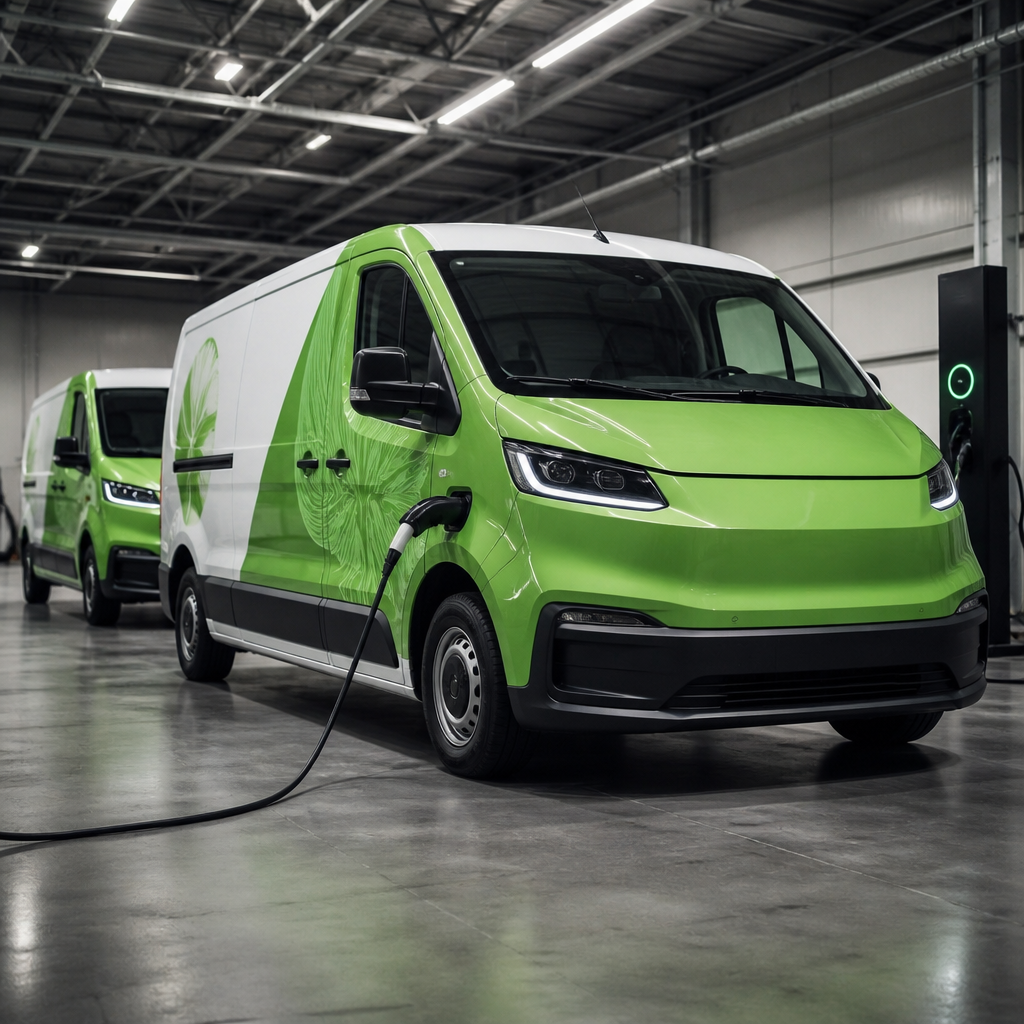
Electric vehicles have fundamentally changed the calculus of fleet management. Where traditional diesel or gasoline fleets could absorb minor inefficiencies without dramatic consequence, EV fleets operate on tighter energy margins — and every pound of added weight translates directly into reduced range. For fleet managers and brand marketers exploring vehicle wraps as a mobile advertising medium, this creates a genuinely new set of questions. Chief among them: does the type of wrap film you choose actually matter for range, and if so, how do you balance that concern against the visual impact your brand demands?
The Weight Problem in EV Fleet Wrapping
It might seem counterintuitive to worry about the weight of a vinyl wrap. After all, a full vehicle wrap on a standard commercial van typically adds somewhere between four and eight pounds of material — a fraction of the vehicle’s total payload. But EVs are uniquely sensitive to incremental weight additions. Battery-powered drivetrains do not benefit from the same energy density reserves that combustion engines enjoy, and range anxiety is already a real operational concern for fleet operators managing delivery routes or service territories.
The physics are straightforward: heavier vehicles require more energy to accelerate and maintain speed. On a fully loaded EV van already carrying cargo and passengers, even a modest increase in wrap weight can shave meaningful miles from a single charge. This is why the material science behind wrap films has become a legitimate operational consideration, not just an aesthetic one.
Traditional PVC Films and Their Limitations
Conventional vehicle wrap films are predominantly made from polyvinyl chloride, or PVC. These materials have dominated the industry for decades because they are flexible, durable, and relatively inexpensive to produce. However, PVC films carry several disadvantages that are becoming harder to ignore in an era of sustainability-focused fleet operations. PVC contains chlorine compounds that can release harmful dioxins during manufacturing and end-of-life disposal. They are also heavier per square meter than many emerging alternatives, and their environmental profile conflicts directly with the green credentials that EV fleet operators are often trying to project.
For a company that has invested significantly in electric vehicles to reduce its carbon footprint, wrapping those vehicles in chlorine-laden PVC films sends a contradictory message — both environmentally and operationally.
Non-PVC Chlorine-Free Films: A Smarter Material Choice
Non-PVC, chlorine-free wrap films have advanced considerably in recent years. Materials based on polyurethane, polyolefin, and thermoplastic elastomers now offer competitive conformability, print quality, and durability without the environmental and weight penalties associated with traditional PVC. These films tend to be thinner and lighter while maintaining the structural integrity needed for outdoor exposure, UV resistance, and the mechanical stresses of daily vehicle use.
The weight savings from switching to a premium chlorine-free film may seem modest in isolation — perhaps one to two pounds on a full wrap — but when multiplied across an entire fleet of twenty, fifty, or a hundred vehicles, the cumulative range preservation becomes operationally significant. More importantly, these materials align with the sustainability narrative that EV fleet operators are actively building with their customers and stakeholders.
Print Performance and Visual Quality on Lighter Films
One concern fleet managers sometimes raise is whether lighter, non-PVC films can deliver the same vibrant, high-resolution print output that traditional PVC wraps are known for. The answer, increasingly, is yes. Modern chlorine-free films engineered for wide-format digital printing accept UV-curable and latex inks with excellent adhesion and color gamut. The visual results are comparable to — and in some cases superior to — conventional PVC substrates, particularly in terms of color stability over extended outdoor exposure.
This matters enormously for fleet branding, where consistency across dozens of vehicles and multiple years of service life is non-negotiable. A wrap that fades unevenly or loses adhesion prematurely is not just an aesthetic problem — it is a brand integrity problem.
Crafting EV Fleet Graphics That Work Harder
Choosing the right film is only one dimension of effective EV fleet branding. The design itself must account for the unique contours, panel breaks, and charging port locations that distinguish electric vehicles from their combustion counterparts. Thoughtful graphic placement ensures that branding remains legible and impactful regardless of viewing angle or vehicle configuration. For fleet operators navigating these decisions, following proven EV fleet graphics design tips from specialists who understand both the material science and the visual communication requirements can make the difference between a wrap that performs and one that simply exists.
How Small Fleet Operators Can Leverage Technology to Compete
The conversation around wrap materials and EV range is not limited to large enterprise fleets. Small and mid-sized operators are increasingly entering the EV space, and they face the same material selection decisions with fewer resources to absorb mistakes. Digital tools — from wrap design software to material specification databases — are leveling the playing field considerably. Understanding how small manufacturers can compete using digital tools offers a useful framework for fleet operators who want to make informed, data-driven decisions about wrap materials without the overhead of a dedicated procurement team.
Total Cost of Ownership: Beyond the Sticker Price
When evaluating non-PVC chlorine-free films against conventional PVC alternatives, fleet managers should resist the temptation to compare only upfront material costs. The total cost of ownership calculation must include range impact, disposal costs, potential regulatory compliance expenses as chlorine-based materials face increasing scrutiny, and the reputational value of aligning wrap materials with the sustainability mission that motivated the EV investment in the first place. In many cases, premium chlorine-free films deliver a favorable total cost of ownership even when their per-square-meter price is modestly higher than commodity PVC.
About Craftsmen Industries
Craftsmen Industries is a recognized leader in custom vehicle graphics and fleet branding solutions, with deep expertise in the specific requirements of electric vehicle fleets. Their team works closely with fleet operators to select materials that balance visual impact, durability, and operational efficiency — including guidance on non-PVC and chlorine-free film options that support both range preservation and sustainability goals. With decades of experience across commercial, government, and specialty vehicle applications, Craftsmen Industries brings a level of technical and creative sophistication that generic wrap shops simply cannot match.
The Broader Creative Challenge in Fleet Branding
Beyond material science, there is a broader creative challenge facing fleet branding professionals. As more brands invest in EV fleets and vehicle graphics, the risk of visual homogeneity grows. Differentiation requires genuine creative thinking, not just competent execution. Industry observers have noted concerns about a creative eclipse in advertising and branding — a tendency to default to safe, familiar visual languages rather than pushing for ideas that genuinely capture attention. EV fleet graphics represent an opportunity to break that pattern, using the vehicle itself as a canvas for bold, purposeful brand expression.
Conclusion
The intersection of wrap material science and EV operational efficiency is not a niche technical footnote — it is a genuine strategic consideration for any fleet operator serious about maximizing the return on their electric vehicle investment. Non-PVC chlorine-free films offer a compelling combination of reduced weight, improved environmental credentials, and competitive visual performance. When paired with thoughtful graphic design that accounts for EV-specific vehicle architecture, these materials enable fleet branding that is as efficient as the vehicles themselves. The brands that recognize this connection early will be better positioned to build fleets that perform well on the road and in the marketplace.