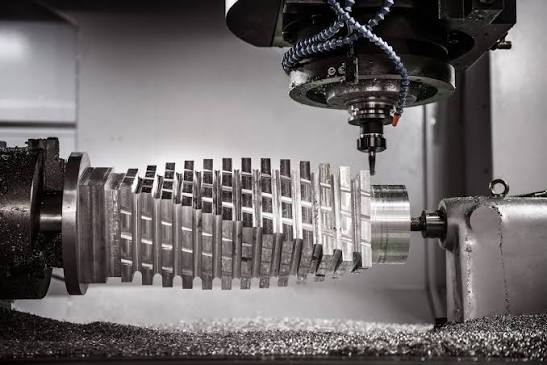
The automotive industry is undergoing its most significant transformation in a century. Electrification, lightweighting, and the pursuit of ever-tighter tolerances are reshaping how vehicles are designed and built. At the heart of this revolution lies CNC machining — the precision manufacturing process that turns raw materials into the critical components that make modern vehicles safer, more efficient, and more reliable.
As combustion engine components like crankshafts, cylinder heads, and camshafts give way to electric motors, battery housings, and power electronics, the demands on precision machining have intensified. The integration of multiple machining steps in one machine, the use of five-axis machining, and flexible automation solutions have become key trends affecting the entire industry. For manufacturers supplying the automotive sector, the ability to produce components with micron-level precision across a range of materials is no longer optional — it is the baseline for competitiveness.
Aluminum: Powering the Lightweight Revolution
Aluminum has become the material of choice for automotive lightweighting. Electric vehicles, in particular, use significantly more aluminum than their internal combustion counterparts — battery trays, motor housings, cooling plates, and structural components are increasingly specified in aluminum alloys. The push for extended range and improved efficiency has made every gram count, and aluminum’s exceptional strength-to-weight ratio makes it indispensable.
However, machining aluminum at scale presents distinct challenges. Thin-walled structures common in automotive components can extend machining cycles, while cutting heat and material stress can cause workpiece deformation. High-speed cutting techniques have emerged as a critical solution, offering the speed, precision, and reduced cutting forces needed to process aluminum automotive components efficiently.
For manufacturers producing electric vehicle components, the requirements are especially demanding. Battery trays typically specified in 6061-T6 aluminum require flatness tolerances that push the limits of conventional machining. Advanced multi-axis CNC milling centers with high-speed spindles are now essential for achieving these specifications. Aluminum precision machining capability has become a key qualification for suppliers seeking to serve the growing EV market.
Brass and Copper: Enabling the Electrified Powertrain
The transition to electric vehicles has dramatically increased the copper content in modern automobiles. Electric vehicles contain substantially more copper than their internal combustion counterparts — wiring harnesses, busbars, motor windings, and battery connections all rely on its exceptional electrical conductivity. Brass components appear throughout thermal management systems, sensor housings, and fluid control systems.
These materials present unique machining challenges. Copper is gummy, producing long, stringy chips that can wrap around tools and disrupt automated cycles. Brass, while more forgiving, demands sharp tooling and effective chip evacuation to achieve clean surfaces and tight tolerances. A poorly machined copper busbar can develop high resistance and fail under load. A rough brass fitting can leak in a critical cooling system.
Suppliers serving the automotive sector must have documented process libraries for these materials and the ability to maintain consistency across high-volume production runs. Brass and copper machining parts expertise is becoming increasingly important as automotive electrical systems grow more complex and copper content per vehicle continues to rise.
Stainless Steel: The Workhorse of Critical Systems
Stainless steel remains essential for components that must withstand corrosion, stress, and temperature extremes. Fuel system fittings, exhaust components, brake system parts, and sensor housings all rely on stainless steel grades such as 303, 304, 316L, and 17-4 PH. The material’s corrosion resistance and mechanical properties make it irreplaceable in safety-critical applications.
Machining stainless steel for automotive applications presents significant challenges. Austenitic grades work-harden rapidly; if speeds, feeds, and coolant application are not precisely optimized, the material hardens ahead of the tool, causing premature wear and dimensional drift. The tight tolerances required for fuel system components and transmission parts demand documented tooling strategies and rigorous in-process inspection.
For suppliers serving the automotive sector, stainless steel CNC machining capability combined with quality systems aligned with IATF 16949 is the foundation for long-term partnerships.
Automotive-Specific Machining Technologies
The automotive industry’s demands have driven significant innovation in machining technology. Five-axis machining has become essential for complex components like structural nodes, cylinder heads, and custom intake manifolds. By enabling multi-directional cutting in a single setup, five-axis systems reduce handling errors and ensure that critical features stay aligned.
Multi-spindle machines have emerged as a solution for high-volume production. These systems can machine multiple parts simultaneously, dramatically increasing throughput while maintaining consistent quality. For components like fuel injector bodies, connector pins, and sensor housings, multi-spindle capability is a competitive necessity.
Automation is equally transformative. Robot-tended CNC cells, automated pallet changers, and lights-out manufacturing enable continuous production with minimal supervision. This is particularly valuable for high-volume components where consistency across millions of units is non-negotiable.
Supply Chain Implications for Automotive OEMs
The reshoring and supply chain diversification trends that have reshaped industrial sourcing have particular implications for automotive manufacturers. Regionalization is accelerating as manufacturers seek to reduce dependence on distant suppliers and improve supply chain resilience.
However, finding domestic suppliers capable of meeting the automotive sector’s quality and volume requirements is not easy. The shops that have invested in advanced multi-axis equipment, documented quality systems, and IATF 16949 certification are scarce. For procurement professionals, the challenge is identifying partners that can deliver consistent quality at scale, with the traceability and documentation that automotive OEMs require.
Looking Ahead
The automotive industry’s transformation is accelerating. Electric vehicle production continues to expand, demanding ever more aluminum and copper components. Lightweighting initiatives push structural components toward thinner walls and more complex geometries. Emissions regulations tighten, requiring more precise fuel system and exhaust components.
For manufacturers supplying this sector, the question is not whether to invest in advanced machining capability — it is how quickly they can position themselves to capture the growing demand. The technology required to meet automotive specifications is well understood, but it requires sustained capital investment, documented process knowledge, and a skilled workforce.
The shops that have made these investments will be the ones that secure long-term partnerships with automotive OEMs. Those that have not will find themselves competing for increasingly scarce commodity work. In an industry where component quality directly affects vehicle safety, performance, and customer satisfaction, the distinction between commodity suppliers and strategic partners has never been more important.