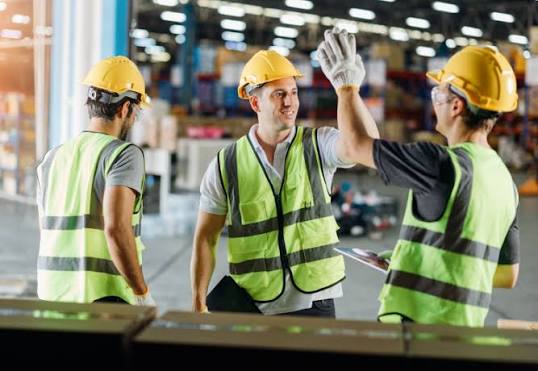
Safety conversations at most workplaces circle back to training sessions, equipment audits, protocol checklists. Fair enough. But what about the clothes workers drag on every morning before walking through the door? That part gets buried. Consistently. Quality workwear stands directly between an employee’s body and whatever’s coming — sharp edges, brutal heat, chemical splatter, relentless physical grind. The right garments genuinely reduce injuries. They keep people functional across a full shift rather than distracted and worn down. And once you actually look at what proper clothing does for both safety and comfort, treating it as optional seems almost willfully negligent. For any employer who actually means it when they talk about worker welfare, this isn’t optional. It’s basic.
How Workwear Protects Against Physical Hazards
Hazards vary. A lot. Construction sites, factory floors, skilled trades — these environments throw sharp tools, abrasive surfaces, and moving equipment at workers all day, every day. Purpose-built fabrics create an actual barrier against tears and punctures that would otherwise go straight to skin. Reinforced seams. Targeted padding. Both placed specifically where punishment lands hardest. Visibility matters too — reflective strips and high-contrast colors help heavy equipment operators spot workers before something goes wrong in a congested, loud, chaotic site. And fit? Critical. Loose fabric near machinery doesn’t just look sloppy — it gets grabbed. It pulls workers in. That scenario plays out more often than most people want to acknowledge, and well-designed workwear cuts that risk down sharply.
The Connection Between Comfort and Workplace Productivity
Discomfort pulls attention. That’s just physiology. When clothing binds at the shoulders, chafes at the collar, traps heat, or kills range of motion, workers stop focusing on the task. They start focusing on the irritation. Properly fitted workwear with breathable construction and real freedom of movement keeps that drift from happening. Comfort also quietly supports posture and technique — which, over weeks and months, prevents the kind of cumulative strain injuries and fatigue-driven accidents that nobody notices building until someone’s hurt. Moisture-wicking and temperature-regulating fabrics matter most for outdoor crews or anyone cycling through temperature extremes. There’s a morale piece here too. Workers stuck in miserable gear carry more ambient stress, call out more, disengage faster. Outfit people properly and they perform better — and they notice that somebody actually thought about their experience out there.
Durability and Long-Term Cost Effectiveness
Quality workwear costs more upfront. No pretending otherwise. But the math tends to flip. Durable garments survive punishing wash cycles and daily abuse without unraveling — so replacement timelines stretch considerably. Cheap workwear degrades fast. Fading, shrinking, seams splitting — suddenly it’s neither safe nor presentable, and it needs replacing before anyone budgeted for it. Workers also lose time mid-shift dealing with damaged or ill-fitting clothing. That’s operational disruption. Sometimes it’s an actual safety gap. Employers running a consistent employee uniform program send a clear signal — that worker welfare isn’t just language on a poster. Retention improves. Recruiting costs fall. And preventing even one serious injury through proper protective gear? That alone tends to cover years of workwear spend, many times over.
Industry-Specific Workwear Requirements
Generic protection only reaches so far. Chemical and manufacturing environments require flame-resistant or chemical-resistant materials — standard off-the-shelf clothing simply can’t carry that load. Healthcare workers need garments engineered for infection control that hold up under aggressive, repeated laundering without breaking down. Electrical workers depend on non-conductive materials and appropriate grounding features. Non-negotiable. Outdoor crews in construction or landscaping face sun exposure, unpredictable weather, and visibility risks all at once. Food service adds another layer entirely — health codes, hygiene compliance, comfort through brutally long shifts. Every industry has its own matrix of demands. Knowing yours means the workwear you provide actually addresses what your people face — rather than offering something vaguely protective that misses the real threats completely.
Conclusion
Workwear isn’t a branding exercise. Not a box to check before a company photo. What you put employees in every single day shapes their physical safety, their comfort, and their long-term health — whether anyone thinks about it consciously or not. When clothing fits correctly, uses the right materials, and targets the specific hazards workers actually encounter, it becomes a genuine piece of safety infrastructure. Fewer injuries. Better productivity. Higher satisfaction. Lower long-term replacement costs. Stop treating workwear as an afterthought — treat it as a tool — and what you’re really communicating to your workforce is that their safety isn’t something to minimize. It’s a commitment you mean.