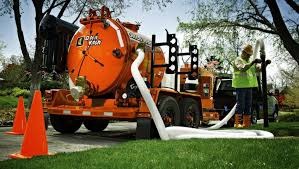
A modern approach to addressing subterranean challenges, vacuum excavation offers revolutionary benefits for drainage solutions. As urban landscapes become denser, traditional excavation techniques face limitations, making vacuum excavation an essential alternative for efficient and safe sub-surface exploration.
Understanding Vacuum Excavation
Vacuum excavation involves using high-powered suction technology to remove soil and debris, exposing underground utilities without causing damage. This non-destructive method is particularly useful in areas with complex utility networks, providing a precise and safe means of excavation. This process not only decreases the risk of utility strikes but also mitigates the potential hazards associated with conventional digging methods.
Benefits of Vacuum Excavation
Safety and Precision
One of the primary advantages of vacuum excavation is its safety. It minimises the risk of damaging underground utilities, such as pipes and cables, which is essential in preventing costly repairs and service disruptions. Precision is key in urban settings, and vacuum excavation delivers pinpoint accuracy in exposing the necessary infrastructure.
Environmental Impact
Vacuum excavation is considered environmentally friendly compared to traditional methods. Traditional excavation often involves heavy machinery, leading to higher emissions and disruption of local ecosystems. In contrast, vacuum excavation limits these disturbances, making it a preferred choice for environmentally conscious projects.
Efficiency and Cost-Effectiveness
Time and cost efficiency is a notable advantage of vacuum excavation. The process is quicker as it reduces the amount of manual labour and machinery required on-site. By shortening project timelines and minimising the labour force, it offers significant cost savings, making it economically favourable for both small and large-scale projects.
Applications in Modern Drainage Solutions
Vacuum excavation is especially beneficial for modern drainage systems. As urban areas expand, the demand for robust drainage solutions becomes paramount. Vacuum excavation provides the flexibility needed to navigate the complex web of underground utilities without risk of disruption, ensuring that drainage systems are installed efficiently and without incident.
Maintaining Infrastructure Integrity
Preserving the integrity of existing infrastructure is a key concern during any excavation project. Vacuum excavation negates the risk of accidental damage during the exposure of drainage pipes and other related utilities, maintaining their operational integrity and longevity.
An Ideal Choice for Urban Environments
Given the dense concentration of infrastructure in urban areas, vacuum excavation is ideally suited for such environments. It allows for safe access to underground utilities while causing minimal disruption to the surface, which is particularly important in densely populated areas where disruption must be minimised.
Real-World Examples
Several municipalities have already implemented vacuum excavation techniques for developmental projects. These instances highlight its benefits in reducing risks associated with traditional methods, thus earning its reputation as an indispensable tool in modern civil engineering.
Future Potential
The future potential of vacuum excavation in drainage and other civil projects is vast. As technology advances, the efficiency and capability of vacuum excavation are expected to expand, providing even greater benefits and possibly becoming the standard for sub-surface works.
Concluding Thoughts
In conclusion, vacuum excavation represents a leap forward in excavation technology, offering critical benefits for modern drainage solutions. Its adoption is a prudent choice for contractors seeking safe, efficient, and environmentally friendly methods of exploring and modifying urban landscapes.
From enhancing safety protocols and preserving the environment to reducing costs, the advantages of adopting vacuum excavation are clear. As urban infrastructure continues to grow in complexity, so does the need for innovative solutions like vacuum excavation to meet the demands of the future.