Note:
- All keywords are highlighted in Green
- Meta title and description are mentioned below
Keywords:
- CPA course (5 times)
- CPA full form (4 times)
Meta Title: Top Skills Every CPA Course Student Needs in Modern Finance
Meta Description: Discover the top skills CPA course candidates need to succeed in modern finance, from data analytics and technology to leadership and strategic thinking.
Word Count: 903
Pursuing a CPA course gives you access to finance, but the right set of skills will help you stand out from other applicants. Contemporary finance is rapidly changing due to automation and digital transformation processes, the development of data analysis and ever more sophisticated business decisions, and the introduction of new rules and regulations.
These skills help CPAs adapt to changing demands of the work environment, increase the quality of financial information they provide, and assume important roles. If you are either a CPA full form (Certified Public Accountant) professional or an experienced accounting professional, you need to ensure that you continuously develop technical and non-technical skills to enhance your career opportunities.
Key Skills That Every CPA Course Professional Must Ace In Evolving Finance Sector
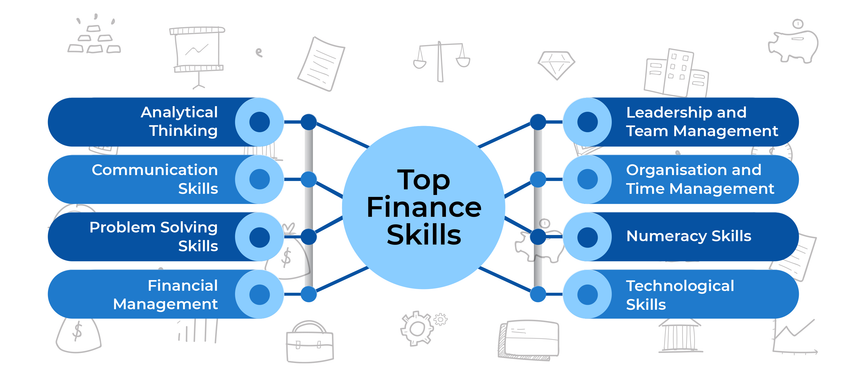
1. Financial Analysis and Critical Thinking
To be an efficient CPA full form (Certified Public Accountant) professional, one must have an understanding of preparing financial statements and keeping good books. Through financial analysis, CPAs can analyse financial information to identify trends, measure company performance, determine what makes a company profitable, and generate cash flow.
Another equally critical skill for handling financial situations is that of critical thinking. CPAs must be able to analyse different financial situations, identify possible risks, ask questions about unusual results, and apply proper accounting treatment.
2. Data Analytics and Technology Skills
The world of accounting and finance is changing due to technology! CPA course professionals in the modern era should have knowledge of using accounting software, ERP, data analytics tools and automation tools. The process involved in determining the methods used in collecting, processing, and presenting financial data can bring more efficiency and accuracy.
Use of data analytics enables CPAs to identify those patterns which could otherwise not be noticed using conventional financial reporting. The skill set of tools such as Power BI, Excel, SQL and other analytics tools can enable professionals to prepare reports and monitor key performance indicators.
3. Knowledge of Taxation and Regulatory Compliance
Taxation requires significant expertise from CPAs because laws keep changing. CPAs need to have good knowledge regarding taxation laws and any developments that may occur within it in order to be able to spot any compliance requirements and plan for taxes effectively.
However, regulatory knowledge does not stop at taxation. It is also important to note that depending on the responsibilities of the CPA, he or she might need to be knowledgeable in other areas like accounting principles, corporate regulations, and auditing, among others.
4. Auditing and Risk Management
Auditing skills have great relevance in the current financial sector! CPA full form (Certified Public Accountants) must know how to analyse financial data, review internal control systems, detect material risks and gather adequate evidence for auditing. An appropriate auditing background will enable professionals to analyse whether financial data is accurate and whether the process works effectively.
Risk management has become an important responsibility for finance professionals. Businesses face financial, cybersecurity, operational, regulatory and market-related risks. CPAs who can detect potential risks, analyse their financial impacts, and recommend appropriate controls can add value to organisations beyond their accounting roles.
5. Ethical Judgment and Professional Integrity
CPA’s deal with confidential financial matters and are part of the decision-making process, which could impact not only their clients, but employers and other parties as well. Therefore, professional ethics and judgment play an important role. The professionals taking part in a CPA course must be able to identify ethical questions, identify possible conflicts of interest, be confidential and make decisions according to the requirements of professionalism.
It is important to have high ethical standards, especially when professionals face pressure from their clients or organisations. In the case of CPA such situations might include questions related to dubious financial transactions, doubtful financial statements or contradictions between business objectives and regulatory rules.
6. Adaptability and Continuous Learning
The field of finance keeps changing with changes in technologies, different business practices, varying regulations, and the dynamics of the economy. CPAs should cultivate an approach based on continuous learning. Familiarity with the current accounting standards, taxation issues, and new technologies will keep a professional relevant for the rest of his or her career.
Flexibility also counts, as does a changing scope of duties. CPA full form (Certified Public Accountants) professionals may move from accounting and auditing to the field of financial planning, risk management, consulting services, corporate finance, or management. Individuals willing to learn new skills and adapt to new expectations can take advantage of new career opportunities.
Final Takeaway
Succeeding as a CPA now requires much more than accounting skills alone. Having the right analytical, technological, business, and problem-solving skills can keep CPAs ahead of the game in an ever-changing financial world.
Developing these skills regularly helps CPAs build a career advantage and add value to the organisation. Do you want to build a successful CPA career? Get personalised expert guidance throughout your CPA course journey and uncover a rewarding international career by developing industry-relevant skills in the finance sector.
FAQs
1. What can CPAs do to develop their professional competencies?
CPAs can build professional skills through training, project work, seminars, and continuous learning in the industry.
2. Do soft skills matter for CPAs?
Certainly, competencies like leadership, teamwork, flexibility, communication, and problem-solving can help CPAs develop their careers.
3. What is the significance of having technological competency in CPAs?
Technological competencies may enable CPAs to work efficiently using software, artificial intelligence, automation, and data analytics.