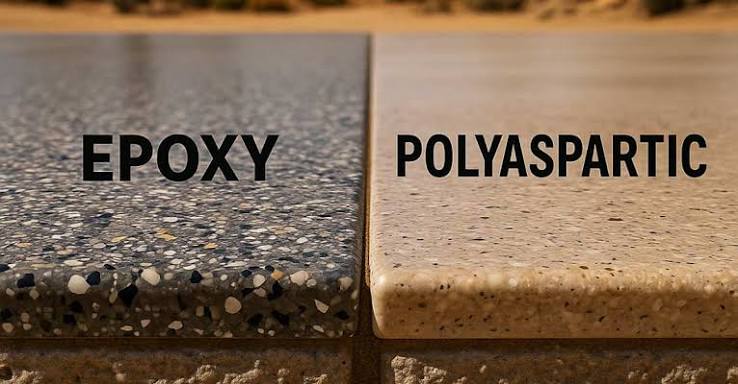
Warehouse operators in Orlando face high demands for strength, safety, and cost control from their concrete coatings. We compare polyaspartic floors to traditional epoxy flooring to show clear differences that impact long-term value.
Both systems protect busy warehouse spaces but perform differently in cure times, chemical resistance, humidity tolerance, and finish stability. As a result, choosing the right system affects repair cycles and operational downtime over the years of use.
Weighing these factors helps us guide decisions for the concrete coatings Orlando businesses rely on each day. Let’s first look at durability and ongoing maintenance costs.
Evaluate Durability and Maintenance Costs
Evaluating durability and maintenance costs is critical for any warehouse floor investment. Long-lasting results depend on material performance and consistent upkeep, which is why many facilities comparing warehouse floor coatings also review commercial epoxy flooring in Orlando alongside polyaspartic systems.
- Polyaspartic durability: Polyaspartic floors deliver strong abrasion resistance compared to many standard epoxy systems, helping surfaces hold up under forklifts and constant traffic.
- UV stability: Polyaspartic coatings maintain color stability under Florida sun exposure, while epoxy may show gradual discoloration in exposed areas.
- Maintenance efficiency: Polyaspartic floors resist stains and simplify cleaning routines, which helps reduce maintenance cycles over time.
- Labor considerations: Faster installation timelines reduce labor hours compared to multi-day epoxy applications, improving overall project efficiency.
Assess Installation Time and Downtime
Installation speed directly affects productivity in warehouse environments where downtime impacts operations.
- Polyaspartic systems: Polyaspartic floors cure within 2–3 hours, allowing same-day return to service under normal Orlando conditions.
- Epoxy coatings: Epoxy flooring typically requires longer cure windows across multiple layers, extending project timelines.
- Climate reliability: Polyaspartic systems perform consistently in Florida humidity and temperature shifts, allowing more flexible scheduling throughout the year.
Compare Chemical and Abrasion Resistance
Warehouse environments demand strong resistance to chemicals and surface wear.
Polyaspartic floors create a dense, protective surface that limits penetration from oils, fuels, and cleaning agents. Epoxy flooring provides reliable resistance as well, but prolonged exposure can affect surface performance if spills remain untreated.
Abrasion resistance also differs under constant forklift traffic. Polyaspartic systems maintain surface integrity longer due to their flexibility, while rigid epoxy coatings may show wear patterns sooner in high-impact zones.
With our installation process, both systems perform best when supported by proper surface preparation and moisture control tailored to Orlando conditions.
Analyze Temperature and Humidity Tolerances
Temperature and humidity influence both installation success and long-term coating performance.
- Application range: Polyaspartic coatings can be installed across a wide temperature range, while epoxy requires tighter environmental control.
- Humidity response: Polyaspartic systems tolerate humidity changes more effectively during installation, reducing risk of curing issues.
- Structural stability: Polyaspartic flexibility helps coatings adjust to thermal movement in concrete, limiting cracking and surface stress over time.
Examine Slip Resistance and Safety Features
Slip resistance plays a critical role in warehouse safety, where spills and debris are common.
- Non-slip additives: Polyaspartic floors use flake systems and traction materials to improve grip without affecting cleanability.
- Surface consistency: Epoxy flooring also supports textured finishes when properly installed.
- Safety performance: We apply anti-slip systems tailored to workflow patterns, helping maintain safe movement across coated surfaces.
Calculate Long-Term Return on Investment
Long-term ROI depends on durability, maintenance frequency, and operational impact.
Polyaspartic floors provide extended service life with reduced maintenance cycles, which helps stabilize long-term costs. Epoxy flooring offers a lower upfront investment but may require earlier maintenance in high-use environments.
When we evaluate warehouse floor coatings over time, reduced downtime, consistent performance, and lower repair frequency contribute to more predictable operating costs.
We install garage floor coatings, patio & driveway coatings, decorative concrete coatings, and warehouse floor coatings designed for Florida conditions. Each system is supported by our process standards and backed by our HomeLife Warranty.
If you are evaluating commercial epoxy flooring in Orlando or planning a warehouse upgrade, contact us to request a quote. We will assess your facility and recommend the right system to support long-term ROI.