Every few years, homeowners across the country face the same uncomfortable conversation with a roofing contractor: the roof is showing signs of wear, and something needs to be done. The immediate question is rarely about materials or methods — it’s about money. Roof work is expensive, disruptive, and often poorly timed. It arrives alongside other home expenses, during seasons that complicate the work, and with a sense of urgency that makes careful decision-making difficult.
The decision between applying a protective coating and committing to a full roof replacement is one that carries real financial weight. Both approaches have legitimate use cases, and neither is universally right. What matters is understanding the conditions under which each option makes sense — and what each actually costs when you account for labor, materials, lifespan, and downstream maintenance over time.
This article examines both paths honestly, without promoting one over the other. The goal is to give homeowners and property managers a clearer picture of what they’re choosing between and what factors should drive that choice.
What a Sealer Roof System Actually Does
A sealer roof system is not a cosmetic fix. When applied correctly to a structurally sound roof, a quality sealer roof product bonds to the existing surface and creates a continuous, weather-resistant membrane that slows deterioration, reduces moisture infiltration, and reflects heat away from the underlying materials. The premise is straightforward: instead of removing what’s there and starting over, you reinforce what’s there and extend its useful life.
This approach works well when the roof deck itself is intact, when there’s no significant structural sagging or rot, and when the existing surface — whether flat, low-slope, or granule-coated — still has meaningful integrity. The coating doesn’t repair what’s already broken, but it can meaningfully slow what’s breaking down.
The Role of Surface Condition in Determining Viability
The effectiveness of a roof coating is entirely dependent on what it’s applied to. A professional inspection matters here not as a formality but as a functional prerequisite. If the underlying substrate has water damage, soft spots, or compromised seams, a coating applied over those areas will eventually fail at those same points. The coating does not bridge structural deficiencies — it seals and protects sound material.
This is where many homeowners run into trouble. They choose a coating to avoid a larger expense without first verifying that the surface can actually support the treatment. The result is a coating that fails prematurely, and then a replacement that still needs to happen — only now with the added cost of removing and disposing of the failed coating layer. Understanding the condition of the roof before choosing a method is not optional; it determines whether the less expensive option is actually less expensive.
Heat Reduction and Energy Cost Implications
One underappreciated benefit of many sealer roof products is their reflective capacity. Roofs absorb substantial solar heat during warmer months, which drives up cooling loads inside the home. Reflective coatings reduce that heat transfer, which in turn reduces the demand placed on air conditioning systems. The energy savings are not dramatic, but over time they are consistent and measurable — particularly in southern and southwestern climates where summer heat is prolonged.
This benefit does not apply to roof replacement in the same way unless the replacement materials are also chosen for their reflective properties. Standard asphalt shingles, for instance, absorb heat at rates that vary widely by color and composition. A homeowner who replaces a roof with standard materials and forgoes a coating misses an efficiency opportunity that a sealer system would have provided at a fraction of the cost.
The Real Cost of Full Roof Replacement
Roof replacement is sometimes the only reasonable choice, and when it is, delaying it creates compounding problems. Water intrusion damages insulation, ceiling structures, and interior finishes in ways that quickly exceed the cost of the roof work itself. But when replacement is presented as the default option rather than a last resort, homeowners often pay for work that wasn’t yet necessary.
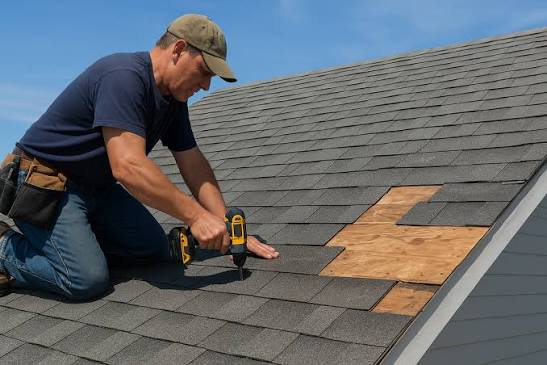
The cost of a full replacement includes materials, labor, tear-off and disposal of existing materials, and any repairs to the deck that are discovered once the old roofing is removed. That last item is unpredictable. Contractors regularly find damaged decking beneath old roofing that adds cost beyond the original estimate. This isn’t always the contractor’s fault — it’s the nature of roofing work — but it means that the quoted price is rarely the final price.
Lifespan Expectations and Long-Term Cost Per Year
One useful way to compare the two options is to think in terms of cost per year of useful life rather than total upfront cost. A roof replacement that lasts several decades has a lower cost per year than a coating that needs reapplication every several years — but only if the replacement actually achieves that full lifespan without significant maintenance costs along the way.
In practice, most roofs require some maintenance regardless of whether they’re new or coated. Flashing fails around chimneys and vents. Valleys collect debris and develop leaks. Gutters affect how water exits the roof plane. A new roof is not a maintenance-free roof. When you account for periodic maintenance on both a new roof and a coated existing roof, the cost gap between the two approaches narrows considerably — especially for roofs that still have structural integrity but have aged past the point where manufacturers’ warranties apply.
Disruption and Timing Costs
Roof replacement is a disruptive project. It requires multiple days of contractor presence, significant noise, the risk of weather exposure during tear-off, and the coordination of dumpster placement, material delivery, and inspection scheduling. For homeowners who rent portions of their property, run businesses from home, or simply have tight schedules, this disruption has a real cost that doesn’t appear on the contractor’s invoice.
Coating application, by contrast, is typically faster and less intrusive. It doesn’t require removal of existing materials, doesn’t expose the interior to weather risk during the work window, and can often be completed in a shorter timeframe. For property managers handling multiple units or homeowners with scheduling constraints, this operational difference has genuine value.
When Replacement Is the Correct Choice
There are clear situations in which replacement is not a matter of preference but of necessity. According to the U.S. Department of Energy, the condition and age of existing roofing materials significantly affect the suitability of any overlay or coating approach. When decking is damaged, when the roof has exceeded its practical lifespan, or when leaks have already caused interior damage, no surface-applied product will address the underlying problem.
Replacement is also appropriate when a homeowner is planning significant renovations that affect the roof structure — adding solar panels, altering rooflines, or upgrading insulation systems that require access through the roof assembly. In these cases, doing the roof work in conjunction with other improvements is often more cost-effective than treating it as a separate, standalone project.
Structural Failure vs. Surface Deterioration
The distinction between structural failure and surface deterioration is the most important judgment call in this entire decision. Surface deterioration — granule loss on shingles, minor cracking in flat roof membranes, fading and weathering — is what a sealer roof system is designed to address. Structural failure — sagging decking, rot, widespread water damage, compromised rafters — requires replacement of the affected components regardless of what’s applied to the surface.
This distinction is not always obvious from the inside of a home or even from a visual inspection from the ground. A qualified roofing assessment that includes an evaluation of the deck condition is the only way to make this determination reliably. Homeowners who skip this step and choose based on surface appearance alone often make a financially costly mistake in either direction — either replacing a roof that didn’t need it, or coating a roof that couldn’t support the treatment.
Factors That Should Actually Drive the Decision
The financial comparison between a sealer roof system and full replacement isn’t resolved by a single number. It’s shaped by a combination of factors that are specific to each property and each homeowner’s situation.
• The structural integrity of the existing roof deck — this determines whether a coating is even viable before any cost comparison is relevant.
• The remaining useful life of the existing roofing material — a roof with significant life left is a stronger candidate for coating than one that has already exceeded reasonable expectations.
• The homeowner’s planning horizon — someone who intends to sell in a few years has different financial logic than someone who plans to stay in the property for decades.
• Local climate conditions — high UV exposure, frequent freeze-thaw cycles, and heavy rainfall each affect both how quickly roofs deteriorate and how well coatings perform over time.
• The cost of interior damage risk — a roof that is actively leaking or close to failure creates financial risk that a coating cannot adequately address; in those cases, delay has a measurable cost.
• Energy performance goals — homeowners focused on reducing cooling costs may find that reflective coating products provide a return that partial replacement with standard materials does not.
Conclusion: The Honest Answer Depends on the Roof in Front of You
The question of which option saves more money doesn’t have a universal answer, because the cost of each option is shaped by conditions that vary from roof to roof and property to property. What can be said with confidence is that a well-applied sealer roof system on a structurally sound surface consistently offers a lower short-term cost than replacement, and a meaningful extension of functional life when conditions support it. Full replacement, meanwhile, is not a premium option to be avoided — it’s the right answer when the underlying structure demands it.
The most expensive outcome is the one that results from choosing the wrong approach. Replacing a roof that had years of viable life remaining costs more than necessary. Coating a roof that needed structural work costs money on a solution that will fail, followed by the replacement cost that should have come first. Neither error is financially recoverable in the short term.
The most reliable path is a genuine, qualified assessment of the roof’s current condition before any decision is made. That assessment — not marketing, not neighbor recommendations, not general rules of thumb — should determine whether a sealer system or full replacement is the appropriate investment for your specific property.