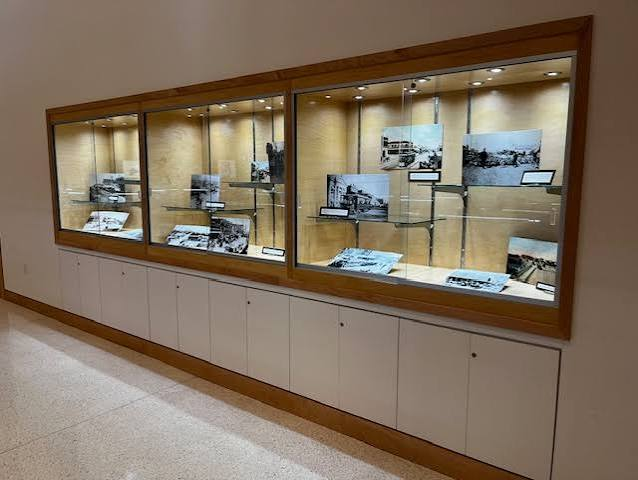
Anyone who has spent time organizing a collection, setting up a creative studio, or arranging a home workspace knows that display decisions are rarely straightforward. The question is not simply where to put something — it is how to protect it, present it with intention, and make practical use of vertical space without compromising the look or integrity of a room. Wall-mounted cases have become a common solution to this problem, but the range of options available in the US market makes it easy to choose poorly if you do not have a clear framework for evaluating what you actually need.
This guide is written for homeowners, studio professionals, collectors, and small business owners who are approaching this decision seriously. It focuses on the factors that actually determine whether a display case will serve you well over time — not just how it looks on the day it goes up.
What Makes Acrylic the Practical Choice for Wall-Mounted Display
Acrylic has become the dominant material in mounted display cases for a reason that goes beyond aesthetics. The material offers a combination of optical clarity, structural flexibility, and resistance to environmental wear that most alternatives simply cannot match at a comparable price point. When people browse options for wall mounted acrylic display cases, they are usually starting from a practical need: they want to see what is inside without interference, they want the case to hold up without yellowing or warping, and they want something that will not require constant maintenance.
Acrylic as a material is significantly lighter than glass while still offering strong impact resistance. This matters considerably when you are mounting a case on drywall or a surface that may not support substantial weight loads. It also matters from a safety standpoint — in the event of an accidental strike, acrylic is far less likely to shatter in a way that causes injury or damages what is stored inside. For those working with irreplaceable items, this is not a minor consideration.
Those evaluating options in this category can find a curated range of wall mounted acrylic display cases designed for both residential and studio use, which can help clarify the range of configurations available before committing to a purchase.
Optical Clarity and Light Interaction
One of the most consistent complaints about lower-grade display materials is that they distort the visibility of what is inside. Acrylic, when manufactured at a quality grade appropriate for display use, maintains a high level of light transmission — meaning what you see through the front panel represents the actual color, texture, and detail of the item inside. This is especially important for collections involving color-sensitive objects such as memorabilia, sports cards, small sculptures, or framed artwork displayed behind a secondary layer of protection.
Light interaction also affects how a case looks on a wall over time. Acrylic that is not UV-stabilized can shift in tone after prolonged exposure to natural or artificial light, taking on a yellowish cast that diminishes both the appearance of the case and the items inside. When evaluating any case, this is a specification worth confirming before purchase.
Weight Distribution and Wall Compatibility
Mounting anything to a wall involves a transfer of load, and display cases are no exception. The concern is not just the weight of the case itself, but the cumulative weight of what will be stored inside. Heavier collectibles, electronic devices, helmets, or assembled models all add meaningful load to a mounting system that may have been designed with lighter objects in mind.
Before installing any wall-mounted case, understanding the composition of your wall surface — whether it is drywall over wood studs, concrete, brick, or plaster — will determine what hardware is appropriate and whether additional reinforcement is needed. A case that is properly supported at the stud line will remain stable for years. One that is mounted only into drywall without appropriate anchors is a recurring maintenance problem waiting to happen.
Dimensions and Configuration: Matching the Case to the Object
The size of a display case is one of those decisions that seems obvious until you realize how many people get it wrong. The instinct is often to choose something that fits the primary object with a small margin of clearance. But display cases serve purposes beyond basic containment — they also frame the object visually, allow for air circulation in cases where that matters, and may need to accommodate accessories, labels, or secondary items alongside the main piece.
A case that is too small will make an object look crowded and will limit your ability to add context or accompanying pieces over time. A case that is too large for a single object can appear sparse or unfinished, undermining the presentation purpose entirely. The right fit is one that creates a sense of proportion — enough negative space to draw the eye toward the object, but not so much that the object appears lost within the case.
Depth as a Functional Consideration
Depth is frequently underestimated in the selection process. Many buyers focus on width and height while treating depth as secondary, but the depth of a case determines what can actually be stored and how it will sit within the case. An object with significant three-dimensional presence — a helmet, a trophy, a detailed model — needs sufficient depth not only to fit physically, but to be positioned in a way that allows the front panel to close cleanly without contact.
Contact between the front of an object and the interior surface of an acrylic panel is a problem for two reasons. First, it can cause surface marks or scratches on both the object and the acrylic over time, particularly if there is any vibration in the environment. Second, it prevents the case from creating the visual separation that gives a display its finished look. Depth should be evaluated with an allowance for how the object actually sits, not just its stated dimensions.
Configuration and Access Design
How a case opens is not a secondary feature — it affects how easily you can clean the interior, rotate items, or update what is displayed. Hinged front panels offer easy access without removing the entire case from the wall, while removable panels or sliding doors may require more clearance in front of the mounted position to operate properly. In tight spaces or closely arranged gallery-style arrangements, this can become a practical constraint that goes unnoticed until installation is complete.
Cases with magnetic closures tend to offer a cleaner visual line than those with exposed latches, though they may not provide the same level of security for high-value items. For environments where children or high foot traffic are factors, a locking mechanism is worth considering even if the case is mounted well above reach.
Surface Preparation and Installation Realities
The integrity of a wall-mounted display case depends almost entirely on the quality of the installation. This is an area where people often underestimate the preparation required, particularly in older homes or studios with walls that have been painted or finished multiple times. As noted in general construction guidance from the Occupational Safety and Health Administration, proper anchoring of wall fixtures requires attention to substrate material, load capacity, and fastener selection — principles that apply equally to decorative installations and structural ones.
Finding wall studs before drilling is the first priority for any mount that will carry meaningful weight. In spaces where studs are not positioned conveniently for your preferred case location, wall anchors rated for the required load are an acceptable alternative, but they should be selected carefully based on the specific wall material and the case specifications.
Leveling and Long-Term Stability
A case that is not level on installation day will not become more level over time. Small misalignments that seem tolerable when the case is empty become visually pronounced once objects are placed inside, particularly for items that have a clear horizontal reference such as framed prints, boxed collectibles, or symmetrically designed products. A reliable spirit level and patience during installation will prevent adjustments that are far more disruptive once the case is fully loaded.
Over time, the weight of contents can cause slight settling in anchors, particularly in older plaster walls. Checking the levelness and anchor integrity of a loaded case at a three-month interval after initial installation is a reasonable maintenance habit that most people skip and occasionally regret.
Placement Strategy for Homes and Studios
Where a case is placed on a wall affects both its function and how the room reads. In a home setting, display cases work best when they are integrated into the visual logic of the room — aligned with furniture lines, placed at eye level for standing adults, and positioned so that lighting (natural or artificial) falls on the front face of the case rather than behind it. Backlighting from a window directly behind a case creates glare that makes viewing difficult and can expose the interior to UV fluctuation across the day.
In a studio context, placement is often more functional than decorative. Cases may serve as organized reference displays for product samples, finished work, or tools that need to remain visible but protected from dust and handling. In these settings, grouping related cases at consistent heights creates visual coherence without requiring the same level of decorative consideration that a living space might demand.
Lighting Integration
Internal or adjacent lighting for wall mounted acrylic display cases can significantly change how displayed items read in a room. LED strip lighting inside a case adds warmth and draws attention to the contents without generating the heat that older incandescent options would. For acrylic cases specifically, heat management is relevant because prolonged exposure to localized heat can cause subtle distortion in the panels over time. Lighting choices that produce minimal heat are preferable for preserving both the case and its contents.
Closing Considerations
Choosing a wall mounted acrylic display case is ultimately a decision about how you want to manage and present objects that have meaning — whether that meaning is personal, professional, or commercial. The process becomes clearer when you separate the practical questions from the aesthetic ones and address them in the right order. Understand the wall surface you are working with, establish the dimensional requirements of the objects you intend to display, and then evaluate configuration and material quality from that foundation.
Acrylic display cases represent a well-established category with reliable solutions across a range of use cases in the US market. The buyers who end up most satisfied are generally those who take the time to evaluate depth and access design alongside the more obvious factors of size and appearance. A case that is easy to open, properly supported, and positioned with attention to light and sightlines will serve its purpose without requiring ongoing adjustment or compromise.
If you are early in the selection process, it is worth reviewing what is currently available across the main configurations before committing to specific dimensions. Matching the case to the object and the space — rather than choosing based on appearance alone — is the single most reliable way to avoid a decision you will want to revisit in six months.