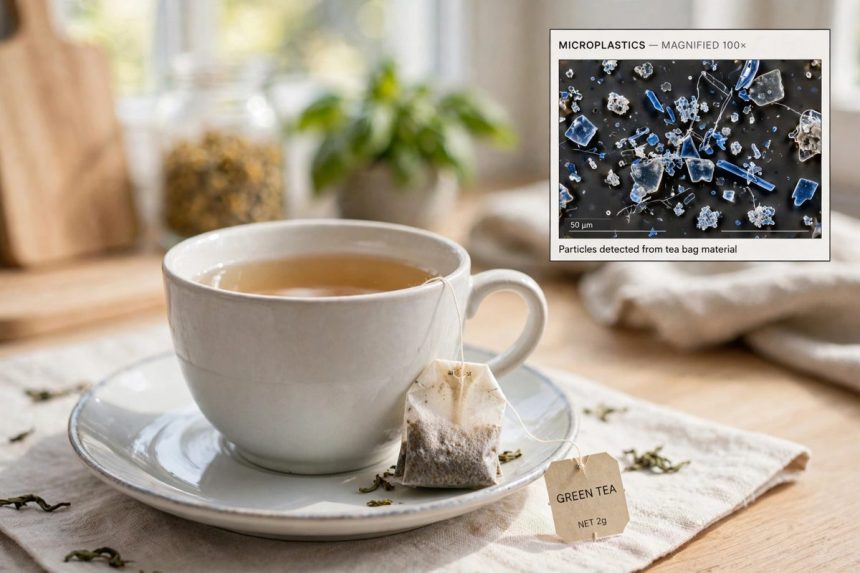
For many people, making tea feels like one of the simplest and healthiest habits of the day. New research, however, suggests that what the tea comes in may matter almost as much as the tea itself. A brewing study covering 28 brands found that plastic tea bags released between 555 and 2,498 microplastic particles per cup, while loose tea released only 0.3 to 2.4 particles in comparison.
The findings, published in a peer-reviewed journal and summarised by Nature, add to a growing body of evidence that everyday plastic packaging can shed tiny fragments into food and drink, especially when it meets hot water.
What the researchers actually tested
The team brewed teas exactly as a consumer would at home, using hot water and standard steeping times, then counted the particles released into each cup. The gap between products was striking. Plastic-based bags, including many premium pyramid-style bags marketed as silky or luxurious, consistently released hundreds or thousands of particles. Paper bags performed far better, and loose leaf tea, brewed without any bag at all, produced almost none.
That difference matters because pyramid bags are often made from nylon or polyethylene terephthalate rather than plant fibres. They look and feel like fabric, hold their shape in the cup and are less likely to tear, but under the microscope they behave like what they are: plastic placed in near-boiling water.
The researchers were careful to measure particles across a range of sizes, because the smallest fragments are the ones scientists worry about most. Larger pieces are more likely to pass through the digestive system, while the tiniest particles are the subject of ongoing research into whether they can cross into tissues.
Should tea drinkers be worried?
Scientists are still working out what microplastic exposure means for human health over a lifetime, and no one study settles that question. What is clear is that exposure is cumulative. Tea is rarely someone’s only source; bottled water, food packaging, cooking utensils and even household dust all contribute. Reducing the sources that are easiest to avoid is therefore a sensible, low-effort step.
There is also an environmental side to the story. Billions of tea bags are thrown away every year, and plastic bags do not compost in a home bin or break down quickly in landfill. Readers who follow our coverage of how sustainable choices are changing everyday habits will recognise the pattern: small, repeated purchases are where plastic use quietly adds up.
Simple swaps that cut the particles
The easiest change is also the oldest one: loose leaf tea with a reusable metal infuser or teapot. It produces a flavour most tea lovers prefer anyway, creates almost no waste and, in this study, released close to zero particles. A good infuser costs a few pounds or dollars and lasts for years.
If bags are more convenient, check the material before buying. Some brands now use paper, cotton or plant-based fibres and say so clearly on the box. If the packaging describes the bags as silky, silken or pyramid without naming a natural material, there is a fair chance they are plastic. Brewing slightly below boiling point and avoiding squeezing the bag hard against the cup may also reduce how much material is stressed during steeping, although switching the bag itself remains the decisive step.
Composting claims deserve a careful read too. Some plant-based plastics only break down in industrial composting facilities, not in a garden heap, so checking local guidance prevents well-meant bags ending up as contamination in food-waste collections.
Part of a bigger plastic picture
Tea bags are a small item with an outsized lesson. As other reporting on this site about falling clean energy costs and shifting consumer habits has shown, markets change quickly once shoppers can see a problem and an alternative side by side. The tea aisle now offers exactly that choice.
None of this means giving up tea, or treating every cup as a risk. It means the ritual many people enjoy several times a day is an easy place to remove a little plastic from both the body and the bin. With loose tea widely available and clearly labelled paper bags becoming more common, the study’s message is less alarm than opportunity: the lowest-plastic cup of tea is also, very often, the best-tasting one.