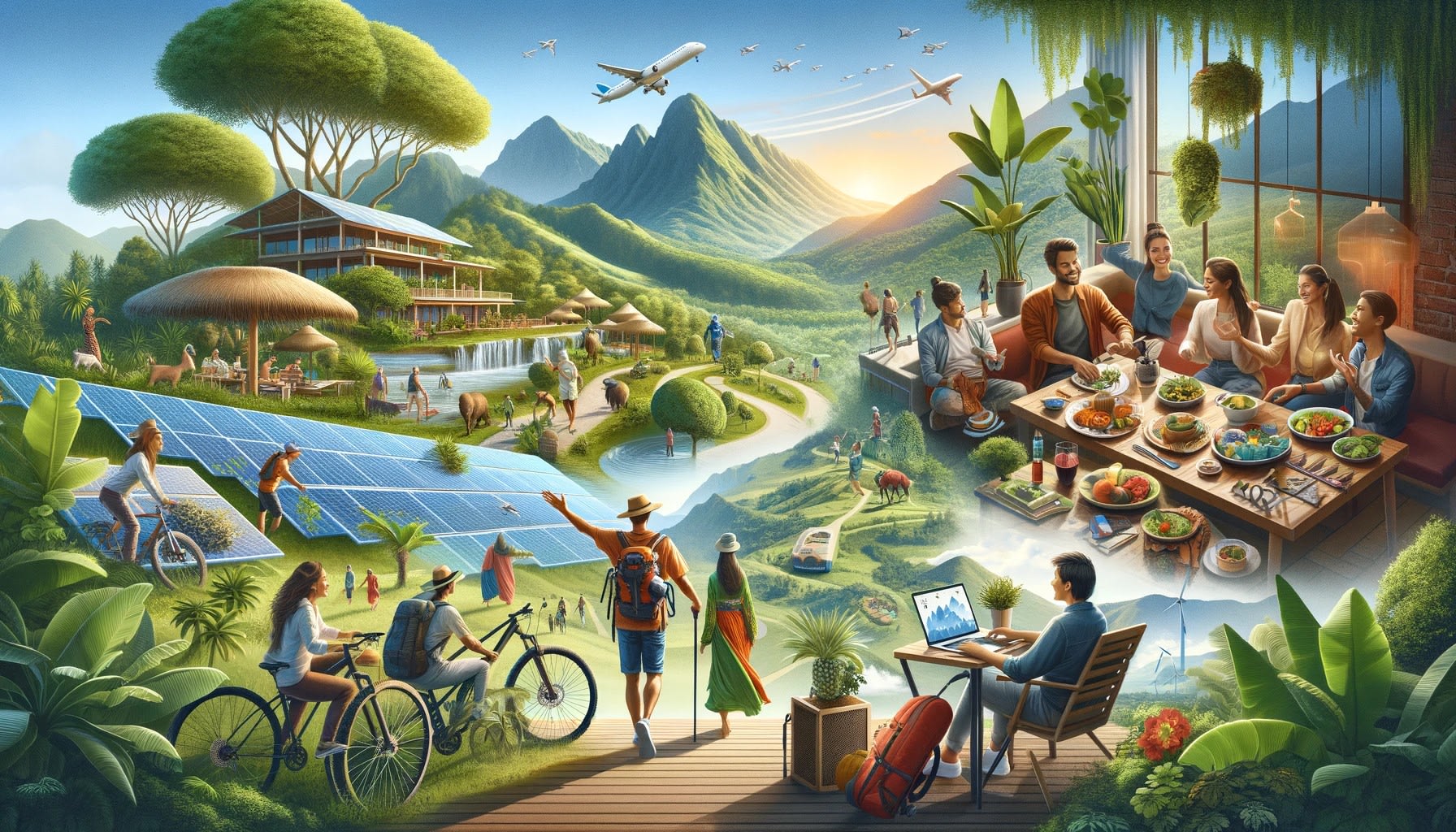
Travel has always been about discovery. People cross borders to experience new cultures, taste unfamiliar food, explore natural landscapes, and create memories that stay with them for years. But the way people travel is beginning to change.
Today, more travellers are thinking beyond where they want to go. They are also considering how their trips affect the environment, local communities, and the destinations they visit.
This shift has helped sustainable travel move from a niche idea into a much broader travel trend. Travellers are becoming more conscious about where they stay, how they move around, what they buy, and which businesses they support.
Sustainable travel does not mean giving up comfort or avoiding international trips altogether. Instead, it is about making better choices that allow people to enjoy the world while reducing unnecessary negative impact.
What Sustainable Travel Really Means
Sustainable travel is an approach to tourism that aims to balance the needs of travellers, local communities, businesses, and the environment.
It often includes choices such as staying in environmentally responsible accommodation, using public transportation, supporting local businesses, reducing waste, and respecting local culture.
The goal is not perfection. A traveller does not have to make every trip completely carbon neutral to travel more responsibly. Even small decisions can make a difference when millions of people begin making them.
For example, choosing a locally owned restaurant instead of an international chain keeps more tourism spending within the community. Using trains or public transport instead of taking several short flights may reduce the environmental impact of a journey.
These choices are gradually reshaping the travel industry.
Travellers Are Paying More Attention to Where They Stay
Accommodation is one of the biggest parts of any trip, which means hotels are becoming an important part of the sustainability conversation.
Many travellers now look beyond price and location when choosing where to stay. They may also consider whether a hotel has sustainability policies, reduces plastic use, conserves energy, supports local suppliers, or participates in recognised environmental programmes.
Hotels are responding by introducing more responsible operating practices.
Some properties have reduced single-use toiletries, installed energy-efficient lighting, improved water management, or partnered with local producers.
However, travellers are also becoming more careful about vague environmental claims.
Simply describing a hotel as “green” is no longer enough for many consumers. Increasingly, people want clear information about what the property actually does.
Travel platforms can support this shift by making sustainability information easier to find when people are researching accommodation. Resources such as This World To Book can help travellers compare destinations, hotels, and travel options while planning more thoughtful trips.
Local Experiences Are Becoming More Valuable
Another major change is the growing interest in local experiences.
For many years, mass tourism often concentrated visitors around the same attractions, restaurants, and shopping areas. While these locations remain popular, modern travellers increasingly want experiences that feel more connected to the destination.
This can include visiting neighbourhood markets, joining locally operated tours, learning traditional crafts, eating at independent restaurants, or staying outside the busiest tourist districts.
These experiences can provide travellers with a deeper understanding of the places they visit.
They can also spread tourism revenue more widely.
When visitors spend money with local guides, small restaurants, independent accommodation providers, and community businesses, more of the economic benefit can remain within the destination.
Public Transport Is Becoming Part of the Travel Experience
Transportation has a major influence on the environmental impact of tourism.
While air travel remains necessary for many international journeys, travellers are increasingly considering alternative transport once they reach their destination.
Metro systems, buses, trains, bicycles, ferries, and walking routes can reduce reliance on private vehicles.
In cities such as Bangkok, London, Paris, Tokyo, and Barcelona, public transportation is not only practical but can also become part of the experience itself.
Travelling by train through a country, for example, often allows visitors to see places they might otherwise miss.
Slow travel has also gained attention.
Instead of visiting several cities within a few days, some travellers are choosing to spend longer periods in fewer destinations. This can reduce constant transportation while allowing visitors to understand a place in greater depth.
People Are Becoming More Conscious About Overtourism
Tourism can provide enormous economic benefits, but too many visitors concentrated in one place can create serious challenges.
Popular destinations sometimes experience overcrowding, rising housing costs, pressure on infrastructure, environmental damage, and frustration among local residents.
Sustainable tourism encourages travellers to consider alternatives.
Instead of visiting only the most famous neighbourhoods or landmarks, people can explore lesser-known areas or travel outside peak seasons.
This does not mean avoiding popular destinations completely. It means approaching them with more awareness.
Travelling during shoulder seasons can reduce pressure on crowded attractions while sometimes providing lower accommodation prices and a more relaxed experience.
Sustainable Travel Is Influencing Trip Planning
Travel planning is also changing.
In the past, travellers might have focused mainly on flights, hotels, and sightseeing. Today, many people include additional questions in the planning process.
How easy is it to get around without a car?
Are there locally owned hotels or restaurants?
Can major attractions be reached by public transport?
Are there responsible wildlife experiences?
Does the destination have sustainability programmes?
These questions can influence which cities, hotels, and activities people choose.
The growing availability of travel information online has made it easier to research these factors before booking.
Responsible Wildlife Tourism Is Receiving More Attention
Wildlife tourism is another area where traveller behaviour is changing.
Animal attractions have long been popular with tourists, but greater awareness of animal welfare has caused many travellers to reconsider certain experiences.
Activities that allow direct interaction with wild animals may sometimes involve practices that are not obvious to visitors.
As awareness grows, more travellers are looking for wildlife experiences that prioritise conservation and animal welfare.
This may include visiting accredited sanctuaries, observing animals in natural environments, or supporting conservation projects.
The result is growing pressure on tourism operators to improve their standards.
Food Choices Can Support Local Communities
Food is one of the easiest ways travellers can connect with a destination.
Local restaurants, food markets, family-run cafés, and street-food vendors often provide experiences that are difficult to recreate elsewhere.
Choosing local food businesses also supports local economies.
Rather than spending most of a travel budget with international brands, travellers can direct more spending toward businesses owned and operated by people within the destination.
In many places, food tourism has become a major reason people travel.
Cities such as Bangkok, Istanbul, Mexico City, Singapore, and Barcelona attract visitors partly because of their culinary cultures.
Supporting local food scenes can therefore be both enjoyable and economically beneficial.
Technology Is Making Sustainable Travel Easier
Technology is also helping travellers make more informed decisions.
Travel websites, booking platforms, digital maps, public transport apps, and destination guides can provide information that once required extensive research.
Travellers can compare routes, locate public transportation, identify local businesses, research hotels, and plan activities before they arrive.
Digital tools can also help reduce unnecessary printing by replacing paper boarding passes, maps, tickets, and itineraries.
As travel technology improves, sustainability information may become an increasingly important part of the booking experience.
Travellers could eventually compare accommodation not only by price, reviews, and location but also by verified sustainability information.
Sustainable Travel Does Not Have to Be Expensive
One common misconception is that sustainable travel is always more expensive.
In reality, many responsible travel choices can save money.
Walking and public transportation are often cheaper than taxis. Staying longer in one destination can reduce transportation expenses. Eating at local restaurants may cost less than dining in tourist-focused areas.
Travelling outside peak season can also result in lower hotel and flight prices.
Sustainability is therefore not only about luxury eco-resorts or expensive environmental programmes.
It can also involve simple, practical choices.
The Travel Industry Is Being Forced to Adapt
The rise of sustainable travel is creating new expectations for the tourism industry.
Hotels, airlines, tour companies, destinations, and booking platforms are increasingly being asked to demonstrate how they manage their environmental and social impact.
Businesses that provide clear information and credible sustainability initiatives may gain greater trust among environmentally conscious travellers.
At the same time, companies must be careful about greenwashing.
Travellers are becoming more sceptical of broad sustainability claims without evidence.
Transparency will therefore become increasingly important.
The Future of Travel Will Be More Conscious
People will continue to travel.
The desire to explore new places, meet new people, and experience different cultures is unlikely to disappear.
What is changing is the way travellers think about those experiences.
Sustainable travel encourages people to enjoy destinations while recognising that tourism has consequences.
Choosing local businesses, reducing waste, using public transportation, staying longer in destinations, respecting local cultures, and supporting responsible accommodation are all ways travellers can make better decisions.
No individual trip will solve the environmental challenges associated with global tourism.
But millions of better travel decisions can influence how the industry develops.
The future of travel is therefore likely to be shaped not only by where people want to go, but also by how responsibly they choose to get there and experience the world.