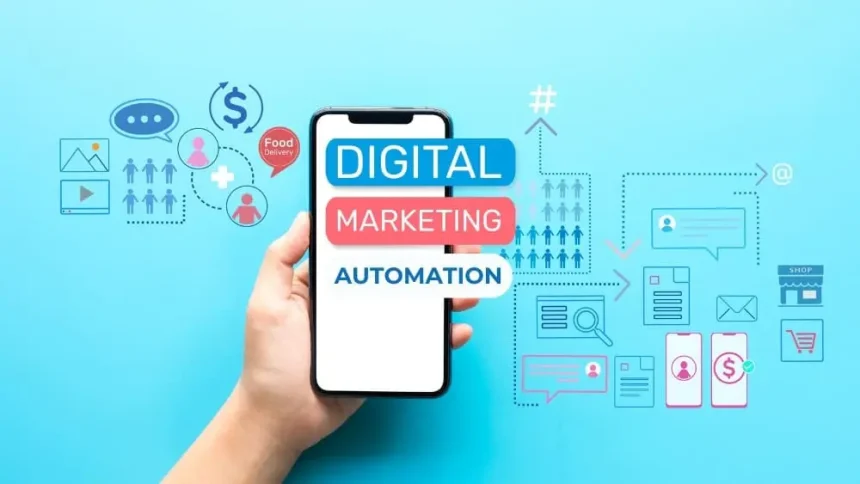
Digital marketing has evolved into a complex ecosystem where businesses must manage multiple channels simultaneously. From search engine optimization to email marketing and customer engagement, each component requires careful planning and constant monitoring.
As the number of marketing tasks increases, many organizations are turning to automation tools to streamline their workflows and improve efficiency.
The Challenge of Managing Modern Marketing Campaigns
Marketing teams today must handle a wide variety of responsibilities, including content creation, search optimization, customer communication, analytics reporting, and campaign management. Each of these activities generates valuable data that needs to be analyzed to improve performance.
Handling these processes manually can be time-consuming and often leads to inefficiencies. Automation tools help solve this problem by performing repetitive tasks automatically and providing actionable insights.
For example, automation systems can track user behavior, monitor marketing performance, and generate reports without requiring manual data collection.
The Role of Automation in Search Engine Optimization
Search engine optimization is a critical channel for driving organic traffic. However, maintaining strong SEO performance requires constant monitoring of website health, keyword rankings, and competitor strategies.
Many businesses rely on tools designed for seo automation to simplify these processes. These tools automatically scan websites for technical issues, monitor keyword performance, and track backlinks that influence search rankings.
Automation allows marketers to quickly identify areas where improvements are needed, enabling them to make data-driven decisions that enhance search visibility.
Instead of spending hours analyzing spreadsheets or manually checking rankings, teams can focus on optimizing content and improving user experience.
Automating Customer Engagement and Campaigns
Beyond SEO, businesses must also manage communication with their audience across multiple channels. Email marketing, lead nurturing, and customer relationship management require consistent messaging and timely interactions.
This is where marketing automation platforms become essential. These platforms allow marketers to design automated workflows that guide customers through different stages of the marketing funnel.
For example, when a user downloads a resource from a website, an automation platform can trigger a series of follow-up emails designed to provide additional value and encourage further engagement.
Automation helps businesses deliver personalized communication while maintaining efficiency across large audiences.
Key Benefits of Marketing Automation
Organizations adopting automation tools often experience several advantages:
Improved productivity
Automation eliminates repetitive manual tasks, allowing teams to focus on strategy and creative work.
Better decision-making
Automated analytics provide insights into customer behavior and campaign performance.
Greater scalability
Automation allows businesses to manage larger marketing operations without significantly increasing workload.
Consistent customer communication
Automated workflows ensure that messages are delivered at the right time and remain consistent across channels.
The Importance of Strategic Implementation
While automation tools offer many benefits, they must be implemented carefully to achieve the best results. Businesses should begin by identifying tasks that consume the most time and evaluating how automation can improve those processes.
It is also important to ensure that automation tools integrate with existing marketing systems so that data can flow smoothly between platforms.
Automation should enhance human decision-making rather than replace it. Marketers still need to interpret insights, develop creative strategies, and understand audience needs.
Conclusion
Automation has become a fundamental part of modern digital marketing. By automating processes such as SEO monitoring and customer engagement, businesses can improve efficiency and scale their marketing strategies effectively.
When used strategically, automation tools allow marketing teams to focus on innovation and creativity while technology handles repetitive tasks behind the scenes.