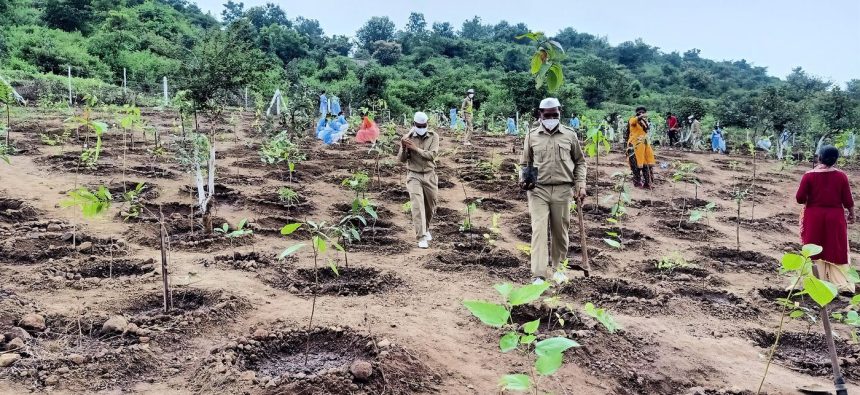
Every city hall loves a tree-planting announcement: the round number, the mayor with a shovel, the saplings in a hopeful row. Urban canopy has become a frontline climate policy, and for good reason — a mature tree cools its street, cleans its air, drinks its stormwater and measurably improves the mental health of the people living under it. But between the announcement and the canopy lies the question too few programmes answer honestly: how many of those trees are still alive in five years?
The evidence is sobering. Studies of municipal planting programmes find first-year losses commonly between ten and thirty per cent, with some poorly run schemes losing most of their trees within a few years. The UN Environment Programme, which promotes urban nature through its climate work, stresses that planting is the cheapest and easiest ten per cent of the job. The other ninety is water, soil, protection and time.
Why city trees die young
Newly planted trees die of thirst more than anything else. A sapling needs regular deep watering through its first two or three summers — precisely the commitment that evaporates when the grant ends or the contractor’s warranty expires. Compacted soil in tree pits, severed roots from utility works, mower and strimmer damage, vandalism and badly chosen species all take their share. Climate change raises the stakes: species selected for the climate of 1990 may be wrong for the hotter, drier city of 2040.
The programmes with the best survival records share recognisable habits. They plant fewer, better trees with proper soil volume. They budget for three years of aftercare before they budget for planting day. They hand watering duties to named people — residents, schools, businesses that adopt their street’s trees — and they publish survival audits rather than planting totals. Our environment section compares the canopy records of the most ambitious cities.
Equity grows in the shade
Tree cover maps almost perfectly onto income maps. Wealthier districts, planted generations ago, enjoy canopy cover several times that of poorer neighbourhoods — and suffer measurably less in heatwaves, which kill the elderly and the unwell in unshaded, concrete-heavy districts first. Organisations such as WWF and city governments alike now frame planting targets explicitly as heat justice, directing the next decade of trees to the districts with the least shade and the most vulnerability.
Counting what matters
The encouraging shift is measurement. Satellite canopy monitoring lets cities track actual leaf area gained or lost, and a few have begun reporting net canopy change rather than gross planting numbers — a far more honest scoreboard. Trees planted this decade will reach their cooling prime in the 2040s, in a hotter world that will need them desperately. The cities that treat planting as the start of a thirty-year relationship, rather than a photo opportunity, are the ones whose grandchildren will sit in the shade.