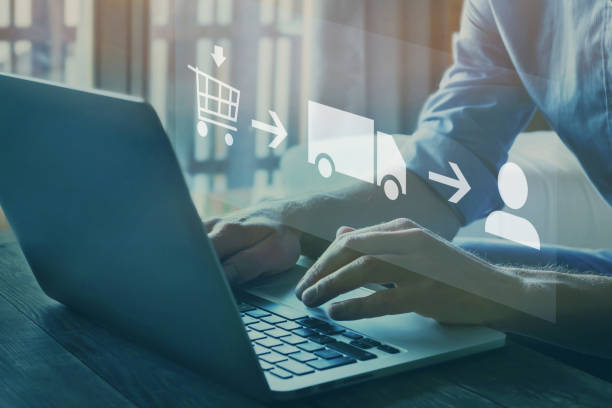
Most logistics teams have tracking systems in place. That is not the question anymore. The question is whether those systems are actually covering the risk that exists across a full international route, from origin to destination, across every logistical mode and every handover point.
For a lot of operations, the honest answer is probably not.
The Gap Between Visibility and Protection
There is a difference between knowing where your cargo is and being protected when something goes wrong. Tracking systems that deliver location updates do the first part reasonably well. The second part is where things get more complicated.
Think about what you actually need when a client raises a dispute. Or when an insurer asks for documentation on a damaged consignment. Or when a regulatory audit requires proof that a pharmaceutical shipment stayed within the required temperature range throughout transit. At that point, a map showing your cargo moved from port to warehouse is not going to be enough.
You need a record. A detailed, timestamped, condition-level record of what happened to that cargo across every leg of the journey.
Most tracking systems were not built to provide that.
What Route Risk Actually Looks Like
A consignment might leave a factory in one country, travel by road to a port, spend time in port storage, load onto a vessel for a multi-week sea journey, transfer to an air freight hub, and complete the final leg by road to the delivery point.
That is five or six distinct stages. Each one involves different handlers, different environments, and different levels of exposure to temperature, humidity, shock, and security risk.
A tracking system that logs vehicle location covers one or two of those stages. The rest relies on third-party reports, carrier updates, and manual documentation that you have no way of independently verifying.
According to the International Chamber of Commerce, cargo crime costs the global economy over 50 billion US dollars annually, with a large proportion of incidents occurring during transit transfers and storage periods. Those are the exact stages that most tracking systems do not cover properly.
The Handover Problem
A pallet gets dropped during loading. A refrigerated container sits on a sun-exposed dock for four hours because of a scheduling delay. A sealed crate gets opened for an unscheduled inspection and is not resealed properly. None of that shows up in a location update. None of it appears in the carrier’s handover documentation unless someone chooses to report it.
Your tracking system sees the cargo arrive at the next checkpoint. It does not see what happened in between.
That blind spot is manageable when shipments go well. It becomes a serious problem the moment something arrives damaged, short, or compromised.
What Condition-Level Data Changes
A tracking system that monitors the cargo itself, not just the vehicle or vessel carrying it, captures what happens at every stage. Temperature is logged continuously throughout a cold chain shipment. Shock events are recorded at the moment they occur during loading or unloading. Humidity readings across a sea freight leg where condensation is a known risk. Light sensor data showing whether a sealed unit was opened at a point in the journey where access was not authorised.
All of that data is tied to a timestamp and a location. So when something goes wrong, you do not have to guess where it happened or argue with a carrier about what their team did or did not do. The record is yours. It is independent. And it covers the full route, not just the legs where your vehicles were involved.
That changes how you handle disputes. It changes how quickly insurance claims get resolved. It changes what you can prove to a client who is asking hard questions about a consignment that arrived in poor condition.
The Routes Where Risk Is Highest
Not all routes have the same level of exposure. International routes that involve different jurisdictions, involve port dwell, or go through areas that experience a higher rate of cargo handling issues are the ones where the lack of tracking information has the greatest cost.
A report from TT Club, one of the leading cargo insurance providers, noted that inadequate packing and securing of cargo, combined with poor condition monitoring during transit, account for a large share of preventable cargo losses each year. Monitoring technology is available to address this issue. The gap is in whether logistics teams are actually using it across their highest-risk routes.
The Question Worth Asking Now
What are the limits of your tracking systems? What handover points are beyond your line of sight? What parts of your highest value routes generate no condition information at all?
These are not simply operational blind spots. They are financial exposures. Every route where your tracking system runs out of data is a route where you lose the ability to defend your operation when something goes wrong.
The technology to close those gaps exists. The question is whether your current setup is using it.