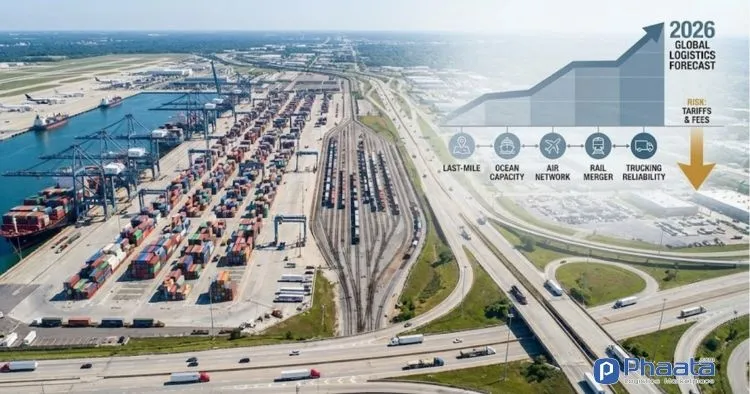
Truck driver demand in Israel does not come from a single short-term shift — it has been forming over time as different parts of the economy began to change at once. Logistics has become more complex, faster, and more dependent on constant movement of goods, which directly increases pressure on transport systems. Instead of a stable workforce, the sector is now facing gaps that need to be filled quickly.
General expectations do not always reflect what is actually happening. When you focus on real job flow, the picture looks different. Platforms such as Layboard.in show this clearly: logistics positions appear regularly and without long gaps, which points to continuous demand rather than occasional hiring spikes. What stands out is not just the number of openings, but how regularly they appear, which suggests that the shortage is ongoing rather than temporary.
What Is Driving the Demand
The need for truck drivers in Israel is not caused by a single factor. It is the result of several developments happening at the same time, each adding pressure to the logistics system.
E-commerce growth, infrastructure expansion, and international trade routes are all increasing the volume of goods that need to be transported daily. These factors do not replace each other — they overlap, creating a continuous demand rather than periodic spikes.
E-commerce and Delivery Speed
Online shopping has significantly changed how goods move inside the country. Delivery expectations keep tightening, so distribution systems are forced to operate with almost no margin for delay. This directly increases reliance on drivers working both local and regional routes — a pattern visible through Israel truck driver job vacancy listings that appear on a steady basis. Earlier logistics models allowed more flexibility, but now coordination and timing have become critical. Even small disruptions can affect the entire delivery flow, adding pressure across transport operations.
Infrastructure and Construction Projects
Large-scale construction projects are another major driver of demand. Road development, housing expansion, and urban infrastructure upgrades all depend on continuous transportation of materials.
These projects require stable logistics support, which increases the need for experienced drivers over extended periods rather than short-term contracts. Materials must be delivered in sequence, often under time constraints, which makes transport reliability critical.
The Role of Ports and International Trade
Most imported goods reach Israel through seaports, which effectively makes them the starting point for internal transport. From there, cargo is quickly redirected across the country rather than stored for long periods. This results in a constant movement of goods, where each step relies on what happened before it. If something slows down at one point, the delay quickly carries over to the rest of the route.
With more cargo moving through ports, the connections between ports, storage facilities, and distribution hubs become increasingly important. Without these transport links, the system cannot maintain a steady flow of goods.
Why Local Workforce Is Not Enough
A key reason for rising demand is the shortage of local drivers. This issue has existed for some time but has become more visible as logistics activity continues to grow.
Fewer people enter the field, while workload keeps increasing. Long hours, responsibility, and physical effort make the job less attractive compared to other options.
Another constraint is the time needed to qualify. Licensing and training take time, so even with interest, new drivers do not enter the market quickly.
Salary Trends and Market Changes
As demand grows, salary levels in the trucking sector have started to adjust. Between 2024 and 2026, wages have shown gradual increases, especially for experienced drivers, with typical ranges moving from around $2,500–$3,500 per month for local routes to $4,000 or more for long-distance or specialized transport roles.
However, salary growth is not uniform. It often depends on route type, working hours, and the company itself. Long-distance routes and irregular schedules tend to offer higher compensation.
In some cases, additional benefits such as bonuses, housing support, or structured shift rotations are used to attract workers, particularly in larger logistics companies and port-related transport operators. This reflects competition between employers rather than a standardized increase across the sector.
Why Companies Look for Foreign Drivers
Due to the shortage of local workers, companies are increasingly open to hiring from abroad, especially large logistics firms, construction supply contractors, and transport companies connected to port operations. This is not only about filling positions, but also about maintaining operational stability.
Foreign drivers help keep transport chains running without interruption, especially during periods of increased demand. For employers, consistency becomes more important than origin. For many candidates from India, this creates a practical entry point into the sector, although adapting to local regulations and working conditions may still require time.
At the same time, companies tend to prefer candidates who already have practical experience. This reduces onboarding time and allows operations to continue without major adjustments.
The demand for truck drivers in Israel is not a temporary surge, but a result of structural changes in how goods move through the economy. As long as logistics continues to expand, the need for reliable transport will remain a central part of the system, making this sector one of the more stable in the current labor market.
FAQ
Why is demand for truck drivers increasing in Israel?
It is driven by e-commerce growth, infrastructure projects, and expanding logistics operations.
Are there enough local drivers?
No, there is a shortage, which increases demand for additional workers.
Are salaries improving?
They are gradually increasing, especially for experienced drivers.
Do companies hire foreign drivers?
Yes, particularly when there is a lack of local workforce.
Is it accessible for workers from India?
Yes, but candidates should be prepared for licensing requirements and work conditions.