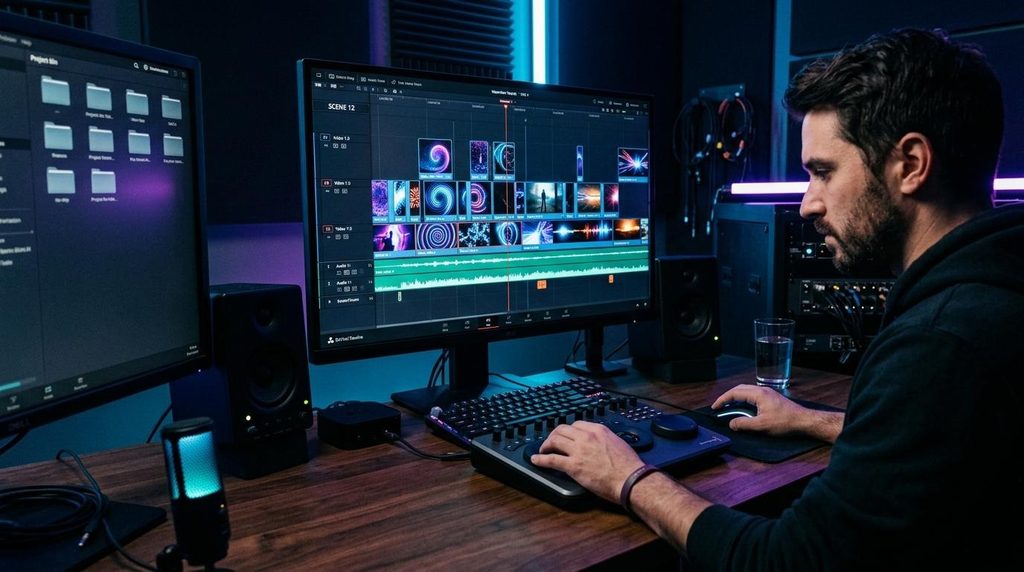
Generative video represents the most technically complex frontier in synthetic media. Where static image synthesis only requires spatial coherence across a single 2D grid, video synthesis requires seamless temporal coherence across dozens of sequential frames.
For independent filmmakers, digital storytellers, and animators, the challenge is twofold: achieving cinematic, unconstrained motion while preventing the visual artifacts, identity warping, and frame flickering that plague early generative tools.
Why Filtered Video Pipelines Constrain Motion
Most mainstream text-to-video services achieve apparent stability by artificially limiting motion dynamism. In an effort to keep subjects predictable and avoid controversial edge cases, their underlying models are trained predominantly on slow pans and subtle facial shifts.
The result is visually polished but fundamentally lifeless footage. Characters appear frozen in place, action sequences lack kinetic energy, and dramatic camera movements are smoothed into generic slow-motion b-roll.
Furthermore, when automated moderation filters inspect individual frames during the diffusion process, dynamic or high-intensity scenes often trigger false alarms, causing long render jobs to abort halfway through.
Architectural Advances in Open Video Engines
Next-generation systems overcome these barriers through advanced cross-frame temporal attention layers. Instead of treating each frame as a semi-independent diffusion pass, modern architectures compute motion trajectories across the entire temporal latent block simultaneously.
Dedicated creative engines like the uncensored ai video generator run uninterrupted inference passes. This allows the model to calculate fluid cloth physics, realistic lighting shifts, and rapid character movements without mid-pipeline termination.
By deploying high-throughput GPU clusters with expanded VRAM capacity, these platforms maintain consistent 1080p and 4K outputs without sacrificing cinematic pacing or dramatic intensity.
Practical Workflows for Independent Filmmakers
Unlocking the full potential of AI video requires a structured production pipeline. Rather than expecting a single prompt to generate a complete cinematic sequence, experienced creators generate short, coherent micro-shots.
By establishing consistent seed parameters, controlling camera trajectory tags (such as dolly, pan, or crane motions), and utilizing frame interpolation, creators can assemble complex narrative sequences that rival traditional CGI production.
Crucially, working without prompt gatekeeping allows directors to craft realistic conflict, high-octane stunts, and intense emotional confrontations essential for compelling narrative cinema.
The Realistic Position
Generative video is no longer just a technical curiosity; it is a foundational production tool for the next generation of visual storytellers.
Platforms that remove artificial guardrails and optimize for raw temporal performance empower creators to push the boundaries of independent cinema, animation, and digital entertainment.