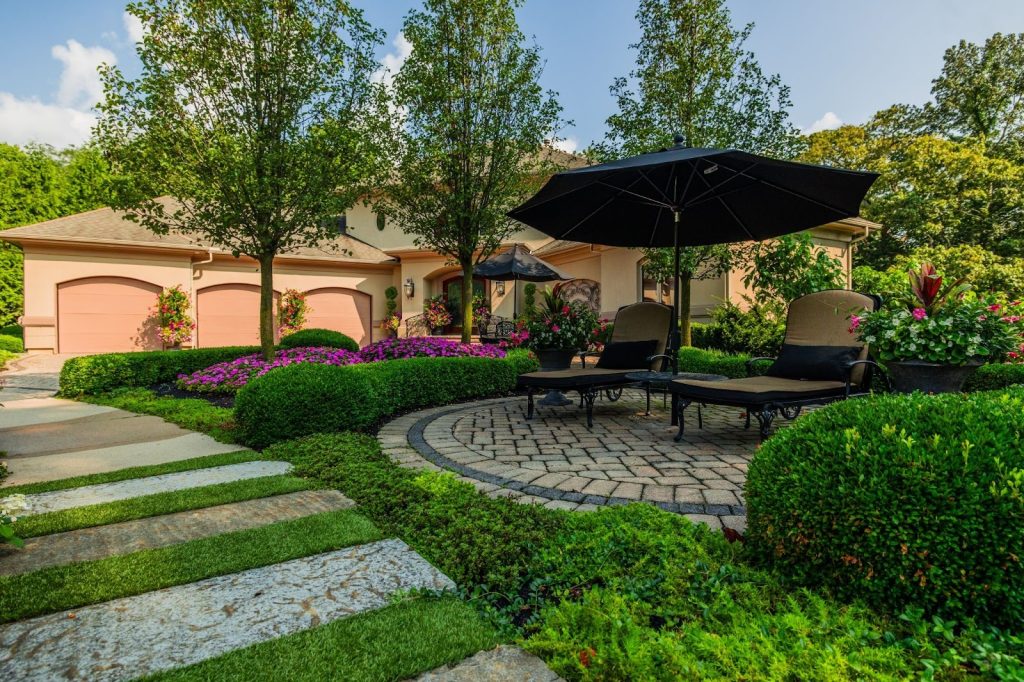
In 2026, the boundary between architectural engineering and natural ecosystems has officially dissolved. We are no longer living in an era where landscape construction is defined solely by manual labor and traditional masonry. Today, the “outdoor build” is a high-tech discipline fueled by AI-driven precision, robotic automation, and advanced material science. These innovations are transforming residential and commercial properties into responsive environments that prioritize sustainability, longevity, and effortless utility.
As the workforce evolves and environmental regulations become more stringent, the industry is responding with tools that feel pulled from the future. From 3D-printed concrete structures to autonomous “jobsite companions,” the following five technological advancements are currently setting a new benchmark for how we design and build our world.
1. On-Machine AI and the “Jobsite Companion”
One of the most significant shifts in 2026 is the integration of Artificial Intelligence directly into compact construction equipment. The emergence of the “Jobsite Companion”—the industry’s first onboard AI large language model—has redefined the relationship between the operator and the machine. This technology allows operators to interact with their equipment via voice commands, automating over 50 complex functions without ever taking their hands off the controls.
This AI doesn’t just execute commands; it offers real-time operational recommendations based on the specific environment. Whether it is adjusting attachment settings for a delicate excavation or providing expert-level guidance to a new operator, this technology lowers the barrier to entry while increasing precision. By running entirely on the machine without relying on cloud connectivity, these AI hubs ensure full functionality even on remote sites where traditional data signals might fail.
2. 3D Concrete Printing (3DCP) for Complex Hardscapes
The use of 3D concrete printing has moved from experimental prototype to a mainstream construction method for high-end hardscaping. This additive manufacturing technology builds structures layer by layer using specialized, high-strength concrete mixtures. By eliminating the need for traditional wood formwork, 3DCP significantly reduces material waste and accelerates project timelines.
For landscape architects, this opens up a world of geometric freedom. We are now seeing the construction of curved retaining walls, tapered planter systems, and custom outdoor furniture that would be cost-prohibitive to build using manual methods. These structures are not only visually striking but are engineered to meet strict seismic standards, making them a resilient choice for disaster-prone regions. When looking to integrate these complex, digitally fabricated elements into a property, the team at Cable Bros Outdoor Living & Landscaping provides the technical expertise and equipment necessary to bridge the gap between digital models and physical reality.
3. Robotic Autonomy and Modular Yard Ecosystems
Robotics have transitioned from simple “gadgets” to essential components of a property’s maintenance and construction fleet. In 2026, we see the rise of modular autonomous cores that can swap functional units based on the season. A single robotic platform can now transition from a precision mower and edger in the summer to a two-stage snow blower or an angled plow in the winter.
These robots utilize a “sensor fusion” approach—combining LiDAR-assisted perception, dual cameras, and RTK positioning—to achieve 360-degree situational awareness. This allows them to navigate complex residential lots with centimeter-level accuracy, identifying and avoiding obstacles in real-time. By treating yard care as a repeatable autonomous task, property owners can enjoy a perfectly manicured landscape without the noise and disruption of traditional gas-powered maintenance crews.
4. Smart Material Science: Carbon-Sequestering and Permeable Masonry
Material science has taken a massive leap forward with the introduction of “regenerative” hardscape materials. 2026 has seen the widespread adoption of carbon-sequestering concrete and bio-based composites that actually pull pollutants from the air. These materials are often paired with high-pressure “pressed” manufacturing techniques that result in incredibly dense, non-porous units capable of withstanding the most brutal freeze-thaw cycles.
Furthermore, permeable paving technology has been refined to handle higher traffic loads while facilitating natural groundwater recharge. These systems allow rainwater to filter through the surface and into a prepared aggregate base, effectively managing stormwater on-site and reducing the strain on municipal infrastructure. For large-scale projects requiring this level of environmental and structural performance, a commercial landscape company offers the specialized logistics and heavy equipment needed to install these advanced paving systems at scale.
5. AR-Enhanced Site Mapping and Virtual Reality Design
The way we visualize and plan a landscape build has been revolutionized by Augmented Reality (AR) and Virtual Reality (VR). Designers now use drones to collect high-resolution aerial data, which is then processed by AI algorithms to create a digital twin of the property. Homeowners can put on a VR headset and “walk through” their new landscape before a single shovel of dirt is moved, experiencing the scale of the pergolas, the sound of the water features, and the shift of shadows throughout the day.
On the construction side, AR-guided machinery provides operators with real-time “cut and fill” visibility. A digital overlay shows the operator exactly where to dig or grade based on the 3D design plan, ensuring that the final build matches the blueprints with millimetric precision. This reduces human error, minimizes the need for re-work, and ensures that the most complex drainage and grading plans are executed flawlessly the first time.
Conclusion: The Future is Built on Precision
The landscape industry in 2026 is no longer about just “moving dirt.” It is about the intelligent application of technology to create spaces that are more durable, more sustainable, and more responsive to human needs. By embracing AI-driven equipment, 3D concrete printing, and robotic autonomy, we are building environments that are prepared for the challenges of the next century.
These innovations allow us to push the boundaries of design while respecting the limitations of our natural resources. As technology continues to disappear into the background of our gardens and plazas, the focus remains on the experience of the space itself. We are building a future where the yard isn’t just an accessory to the home—it is a sophisticated, high-performing asset that enhances every aspect of modern life.