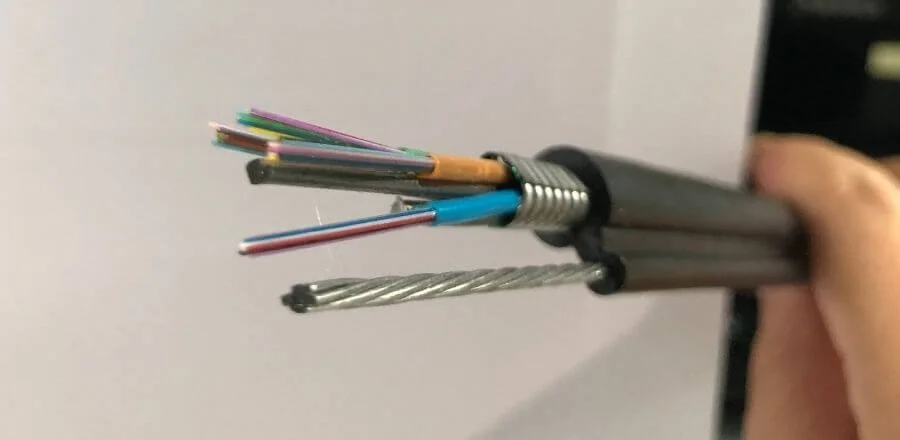
In an era where connectivity is crucial for both personal and professional infrastructures, the reliability of network components cannot be understated. One component that significantly enhances this reliability is the armoured fibre cable, known for its durability and enhanced protection.
Understanding Armoured Fibre Cable
Armoured fibre cables are designed with a protective layer of metal armour, providing superior protection against physical damage. This makes them an ideal solution for various environments where the cables may be exposed to potential harm, such as underground or in industrial settings.
The Structure of Armoured Fibre Cable
The core structure of an armoured fibre cable includes a central core that transmits light signals, surrounded by several layers for protection. These layers often include a metal armouring layer, which can be made from aluminium or steel, providing robust defence against physical impact and rodent damage.
Advantages of Using Armoured Fibre Cable
There are numerous advantages to using armoured fibre cable in both commercial and residential settings. The most notable benefit is the added protection against environmental and mechanical stress. This protective layer ensures that the integrity of the data transmission is maintained even under harsh conditions.
Enhanced Durability
Armoured fibre cables are highly durable, making them suitable for installation in areas prone to mechanical disruption. This characteristic is particularly beneficial in industrial environments where machinery or vehicles might otherwise damage standard fibre cables.
Installation Versatility
The versatility of armoured fibre cables allows them to be installed in a range of locations, including underground, under floors, and in outdoor environments. This flexibility ensures that companies can rely on consistent connectivity irrespective of the landscape or infrastructure challenges.
Greater Security
In addition to physical robustness, armoured fibre cables offer enhanced security against tampering. This is particularly important for sectors that require high-level data security, such as financial institutions or government agencies, where any breach in communication can have significant consequences.
Cost Efficiency
While armoured fibre cables may have a higher initial cost compared to their non-armoured counterparts, their longevity and reliability can result in lower maintenance and replacement costs over time, offering significant savings.
Comparison with Standard Fibre Optical Cables
While standard fibre optic cables provide excellent data transmission capabilities, they are more vulnerable to environmental and mechanical damage. Armoured fibre cables mitigate these vulnerabilities by offering additional protection layers that standard cables lack.
Applications and Industry Use Cases
The use of armoured fibre cables spans multiple industries, from telecommunications to oil and gas. They are particularly beneficial in sectors where cables are exposed to physical threats, ensuring continuous and secure data transmission.
Telecommunication Networks
In telecommunications, armoured fibre cables are essential for maintaining reliable networks, a non-negotiable requirement in our increasingly interconnected world. Their durability ensures that communication channels remain intact even in challenging environments.
Oil and Gas Industry
The oil and gas industry frequently operates in remote and harsh environments. Armoured fibre cables offer the necessary durability and resilience needed to maintain communication and control systems in such conditions.
The Future of Armoured Fibre Cables
As technology advances, the requirement for robust and reliable connectivity will only intensify. Armoured fibre cable technology continues to evolve, providing even greater protection and performance, aligning with the growing demand for secure and efficient data transmission infrastructure.
In conclusion, armoured fibre cables represent a critical upgrade in fibre optic technology, bridging the gap between high-speed data transmission and physical resilience. The investment in such technology not only enhances connectivity but also ensures that networks are equipped to withstand the demands of modern usage.