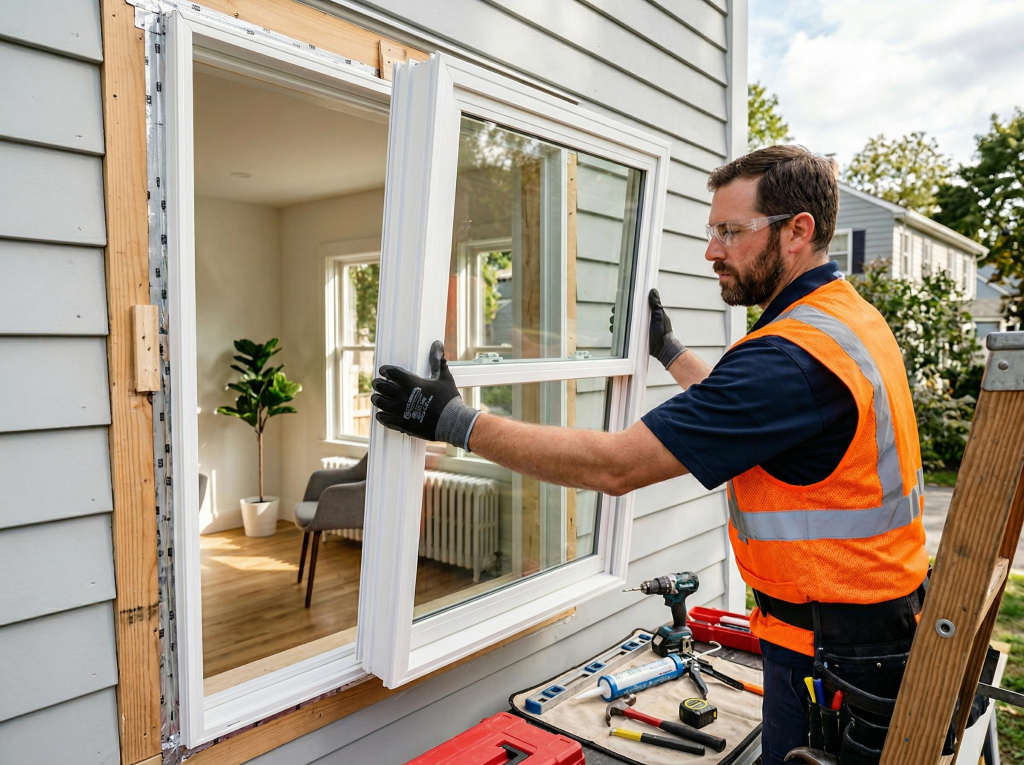
The exact schedule depends on the number of windows, their size, the condition of the existing frames, and whether the new units are standard or custom-made. A small project may be completed in one day, while a full-home replacement can take several days.
Initial Consultation and Measurements
The process normally begins with an inspection of the existing windows. A contractor checks the frames, glass, trim, and surrounding walls for signs of moisture, rot, or structural damage.
Careful measurements are then taken so the new windows fit properly. Homeowners searching for window replacement near me should ask whether the first estimate includes both product costs and installation work.
Ordering and Manufacturing the Windows
After the window style, frame material, glass type, and finish are selected, the order is sent to the manufacturer. Standard windows may arrive sooner, while custom sizes, colors, or shapes often require more production time.
This part of the timeline may take several weeks. Weather, shipping schedules, and product availability can also affect the expected delivery date.
Preparing the Home Before Installation
Homeowners are generally advised to clear the space around every window before the installation team arrives. Furniture, curtains, blinds, wall decorations, and fragile items should be moved out of the way.
Useful preparation steps include:
- Creating a clear path from the entrance to each room
- Removing window treatments
- Covering nearby furniture
- Keeping children and pets away from work areas
- Moving outdoor items away from exterior walls
The installer may also recommend turning off security sensors connected to the windows.
Removing the Old Windows
On installation day, the crew removes the existing windows one at a time. Working in sections helps limit the amount of time each opening is exposed to outdoor weather.
The old sash, frame components, insulation, and sealant may need to be removed. If hidden water damage or rotten wood is found, repairs may be required before the new window can be installed.
Installing and Sealing the New Units
Each new window is placed into the prepared opening and checked for level, alignment, and smooth operation. The installer then secures the unit and adds insulation around the frame.
Exterior and interior sealants are applied to help prevent drafts and water entry. Homeowners planning to replace windows in Edmonton properties should pay close attention to weather sealing because local temperature changes can place additional stress on poorly sealed frames.
Interior and Exterior Finishing
Once the windows are in place, the crew replaces or repairs the trim. Some projects may also require drywall touch-ups, painting, siding adjustments, or new exterior capping.
Finishing work may take additional time if the old frames were damaged or the new windows have different dimensions. Homeowners should confirm whether painting and trim repairs are part of the original quote.
Final Inspection and Cleanup
At the end of the installation, the contractor should test every window. Each unit should open, close, lock, and seal without sticking or requiring extra force.
The final walkthrough may also cover:
- Lock operation
- Screen installation
- Caulking and insulation
- Glass condition
- Warranty information
- Cleaning and maintenance instructions
The crew should remove old materials, packaging, and installation debris before leaving the property.