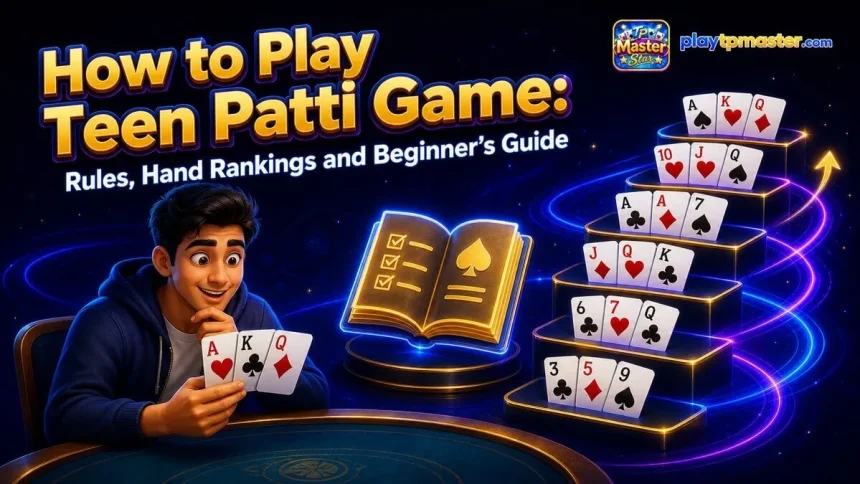
Teen Patti is a popular card game that combines strategy, observation, and luck. Often known as Indian Poker, this traditional game has gained popularity among players who enjoy exciting card games in both master teen patti offline and online casino environments. For beginners, understanding the rules, hand rankings, and basic strategies is an important first step toward enjoying the game responsibly.
This Master Teen Patti Guide explains how the game works, how to recognize different card combinations, and which beginner-friendly tips can help players make informed decisions. Whether someone is learning through a casual game or exploring an online casino platform, a clear understanding of the basics can make the experience easier to follow.
What Is Teen Patti?
Teen Patti is a three-card game traditionally played with a standard 52-card deck without jokers. The objective is to build the strongest possible three-card hand or remain in the game until other players fold. Depending on the version and its rules, players may compete by comparing their hands at the end of a round or by using betting decisions to influence the outcome.
The game usually involves several players sitting around a table. Each participant receives three cards, which are generally kept hidden from opponents. Players then decide whether to continue, increase the stake where permitted, or fold their cards.
Online versions of Teen Patti may include different table formats, visual features, and additional game variations. Therefore, beginners should always review the rules of a particular version before starting.
Understanding the Basic Rules of Teen Patti
Learning the rules is essential before joining a game. Although small differences may exist between platforms, the traditional format follows a straightforward structure.
1. Placing the Initial Stake
A round generally begins with players contributing an agreed starting amount called the boot amount. This creates the initial pot that players compete to win. The exact amount depends on the table rules.
2. Receiving Three Cards
Each player receives three private cards. Unlike community-card games, players generally use only their own three cards to form a hand.
3. Choosing to Play or Fold
During their turns, players can choose to continue or fold. In many traditional formats, players may play blind without looking at their cards or play seen after checking them. The permitted stakes and betting requirements can differ between these options.
A player who folds gives up the chance to win the current pot. Continuing, however, may require additional contributions.
4. Comparing Hands
A round may finish when only one player remains, or when the remaining players compare their cards according to the game’s rules. The strongest qualifying hand wins the pot, subject to the applicable rules and any fees or conditions.
Understanding these steps helps beginners follow the action without making unnecessary decisions.
Teen Patti Hand Rankings Explained
Knowing the hand rankings is one of the most important parts of learning Teen Patti. In the common ranking system, hands are ordered from strongest to weakest as follows.
Trail or Three of a Kind
A trail consists of three cards of the same rank. For example, three kings form a trail. This is generally the strongest standard hand in traditional Teen Patti.
Pure Sequence
A pure sequence contains three consecutive cards of the same suit. For example, the 4, 5, and 6 of hearts form a pure sequence.
Sequence
A sequence consists of three consecutive cards that are not all of the same suit. The precise ordering of certain sequences can vary by house rules, so players should check the table’s ranking system.
Color or Flush
A color consists of three cards from the same suit that do not form a sequence. When two players have a color, the highest card and subsequent cards are generally used to determine the winner.
Pair
A pair contains two cards of the same rank and one different card. For instance, two queens and a seven form a pair.
High Card
When a hand does not qualify for any of the combinations above, it is ranked by its highest card, followed by the next-highest cards when necessary.
Memorizing these rankings allows players to understand their hands quickly and compare them with potential opposing combinations.
Beginner Tips for Playing Teen Patti
Although luck plays a significant role in Teen Patti, good habits can help beginners manage their decisions more carefully.
Start With the Basic Version
New players should begin with a straightforward version of the game rather than immediately choosing complicated variations. A simple format makes it easier to understand turn order, betting rules, and hand comparisons.
Learn the Hand Rankings First
Before focusing on advanced strategies, make sure every standard hand is familiar. Knowing the difference between master teen patti downloads a pair, sequence, color, and pure sequence prevents avoidable confusion during important moments.
Set a Fixed Budget
Decide in advance how much money can comfortably be spent on entertainment. Treat this amount as a limit rather than a target. Never use money intended for essential expenses, and do not borrow money to continue playing.
Avoid Emotional Decisions
A losing round can create pressure to recover money quickly. Chasing losses often leads to larger and less considered bets. Taking a break or ending the session is usually a more sensible response.
Pay Attention to the Rules
Every platform may have its own betting limits, side-show conditions, hand rankings, and other requirements. Reading the rules before joining a table helps players avoid misunderstandings.
Remember the Role of Luck
No strategy can guarantee a winning result. Even a player who understands every rule can receive weak cards or lose against a stronger hand. A balanced approach means making informed choices without assuming that a particular tactic will always succeed.
Understanding Blind and Seen Play
Two common concepts in traditional Teen Patti are blind play and seen play.
In blind play, a participant continues without looking at their cards. In seen play, the participant checks their cards before making decisions. Depending on the rules, the required betting amounts and available actions may differ.
Neither option guarantees a better outcome. Blind play may involve uncertainty, while seen play provides information about the player’s own hand but does not reveal opponents’ cards. Beginners should understand the financial implications of both options before choosing either.
Exploring Teen Patti Online Casinos
Online casino platforms allow players to access Teen Patti through computers and mobile devices. Some services provide different table limits, game variations, and interfaces designed for new players.
When evaluating a platform, review its licensing information, security practices, privacy policy, game rules, and withdrawal conditions. Check whether the operator is legally authorized to offer gambling services in your location. Avoid websites that make unrealistic promises about guaranteed winnings or use unclear terms.
A beginner-friendly interface can make learning more convenient, but the quality of the experience should not be judged by promotional offers alone. Understanding the rules and maintaining control over spending remain more important than bonuses or visual features.
Common Mistakes Beginners Should Avoid
New players sometimes assume that a few successful rounds prove they have mastered the game. In reality, short-term results can be influenced heavily by chance.
Other common mistakes include ignoring hand rankings, joining tables with stakes that exceed a personal budget, continuing after reaching a spending limit, and playing while distracted or upset.
It is also unwise to believe that previous cards reliably predict future results in a properly shuffled game. Each round can produce a different outcome. Learning from mistakes should focus on understanding the rules and improving decision-making rather than searching for guaranteed winning patterns.
Conclusion
This Master Teen Patti Guide provides beginners with the essential knowledge needed to understand the game’s rules, hand rankings, and basic gameplay. From recognizing a trail or pure sequence to understanding blind and seen play, learning the fundamentals can make each round easier to follow.
Teen Patti combines chance with decisions about when to continue or fold, but no approach guarantees success. Beginners should practice with free-play options where available, read the rules carefully, and establish clear spending limits before considering real-money games.
Ultimately, the best way to approach Teen Patti is to focus on learning, responsible participation, and entertainment rather than guaranteed profits. With a solid understanding of the basics, newcomers can explore the game more confidently while keeping their expectations realistic.